American Nuclear Fuel Deal With Seoul Threatens To Raise Tensions on the Korean Peninsula
The 50-50 joint venture disclosed this week allows South Korea to reprocess nuclear fuel on its own territory for the first time.
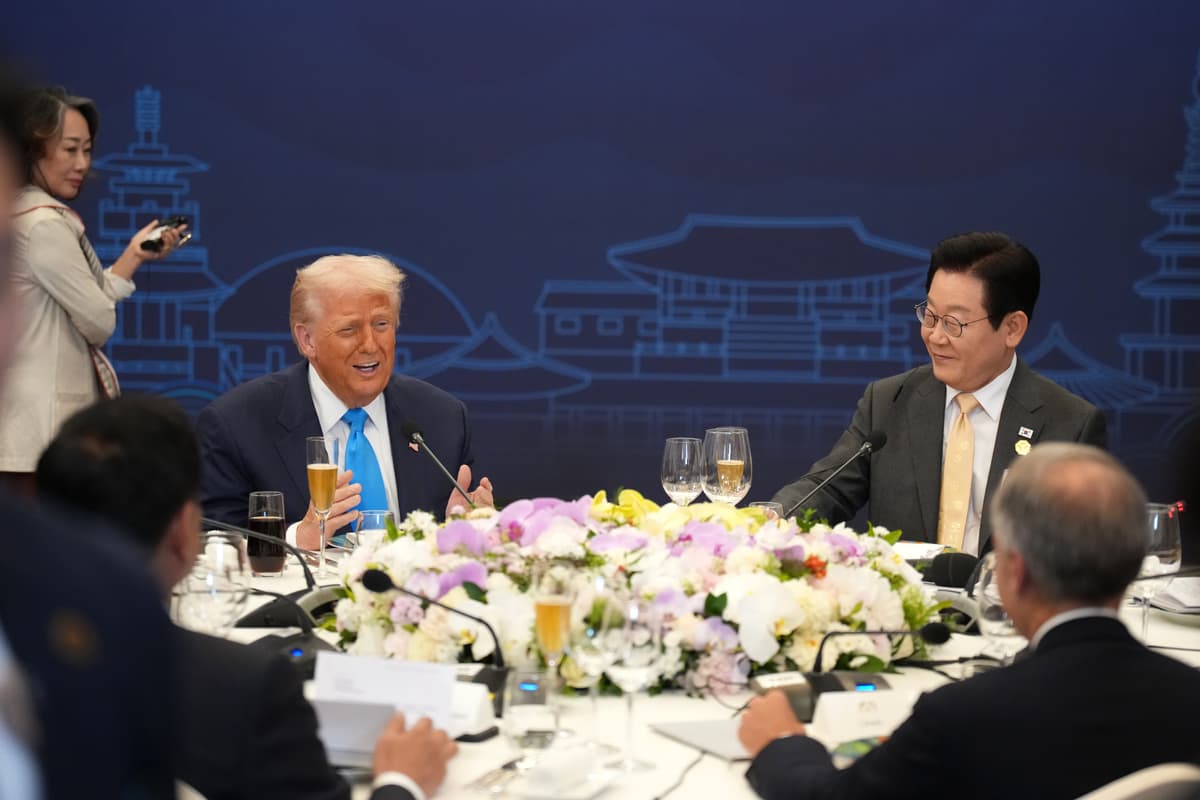

The threat level on the Korean peninsula has escalated with Presidents Trump and Lee Jae-myung agreeing on joint reprocessing in South Korea of uranium and spent nuclear fuel for power plants.
The People’s Republic of China and North Korea can be expected to respond angrily to the plan, which would allow the reprocessing of nuclear fuel in the country for the first time, reducing South Korea’s reliance on Russia and other sources.
Mr. Lee disclosed Wednesday that Mr. Trump had agreed to establish a 50-50 joint venture to process the fuel when the two presidents met in October on the sidelines of an Asia-Pacific Economic Cooperation group summit in the Korean city of Gyeongju. The agreement coincided with a previously announced deal for Seoul to build its first nuclear-powered submarine at a Korean-owned shipyard in America.
While the agreement limits the use of the fuel to “peaceful purposes” such as nuclear power plants, it could be extended at some point to allow the fuel to be used for Korea’s new submarine. That would require changes to a so-called “123 Agreement” which prohibits the use of any American-supplied nuclear material or technology for military purposes, including submarine propulsion.
A former White House official, Victor Cha, predicted China “will use coercion on South Korea, to punish them” for having gotten Mr. Trump to help the South acquire a nuclear submarine. Mr. Cha is now a professor at Georgetown University and in charge of the Korea program at the Center for Strategic and International Studies in Washington.
Just as bad, in the eyes of the Chinese, is the deal on the fuel, which they fear will enable Seoul to develop technology and nuclear stockpiles that could be weaponized at some point in the future.
South Korea, Mr. Cha noted at a CSIS conference, wants nuclear submarines to track North Korean as well as Chinese submarines, the latter nuclear-powered. North Korea does not yet have a nuclear sub but is rumored to be developing one with Russian assistance.
Chinese submarines patrol the Yellow Sea between North Korea and China where, Mr. Cha said, China is building up its forces just as it has done in the South China Sea.
Messrs. Trump and Lee made no mention of the nuclear fuel deal in a “fact sheet” issued two weeks after their meeting in Gyeongju. But Mr. Lee told journalists in Seoul this week that the two had agreed to override a 1972 agreement saying South Korea will not engage in enrichment or reprocessing.
The new understanding dovetails with Mr. Trump’s October 29 announcement of a deal for South Korea to build a nuclear submarine in a Philadelphia shipyard recently acquired by one of Korea’s largest shipbuilders, Hanwha Ocean.The submarine will presumably run on American nuclear reactors.
A senior State Department official, Jonathan Fritz, described the submarine deal as “a clear example of bilateral cooperation that advances our collective capabilities against regional threats” – a reference not only to North Korea but also to its huge allies, China and Russia.
As principal deputy assistant secretary of state for East Asia and the Pacific, Mr. Fritz placed Mr. Trump’s enthusiasm for a South Korean submarine in the context of America’s role in the region. “We are evolving our traditional security alliance into a more comprehensive partnership that is integrated economically and industrially and aligned with broader Indo-Pacific priorities.”
Mr. Lee has carefully avoided the suggestion of Korean participation in any American war beyond the Korean peninsula, but Mr. Fritz, at CSIS, said the two countries were “accelerating innovation and manufacturing in technology, defense and other key fields” as they shaped “a more secure and prosperous future for the entire Indo-Pacific.”
At his Wednesday press conference, Mr. Lee said the agreements on the nuclear submarine and fuel processing marked “a highly beneficial outcome for us, from the viewpoint of strategic flexibility and autonomy.”
The deal, however, complicates efforts by the two leaders to persuade North Korea’s Kim Jong-un to talk to them. Mr. Trump has often claimed that he and Mr. Kim “fell in love” during their three meetings in 2018 and 2019.
A former deputy secretary of state, Kurt Campbell, suggested at CSIS that a fourth summit is unlikely.
“The message from North Korea,” Mr. Campbell said, is that they have “no reason to engage unless we accept North Korea as a nuclear state.” Meanwhile, he said, “President Lee wants a strong nuclear umbrella.”
Mr. Cha agreed. America’s insistence on “complete, verifiable, irreversible denuclearization” is “nice to say,” he said, “but it’s not going to happen in the next five years – or even 10 years.”

