The Battle Against Assisted Suicide in Britain Moves to the Lords
Upper House of Parliament proffers more than a thousand amendments that would take 20 years for their lordships to debate.
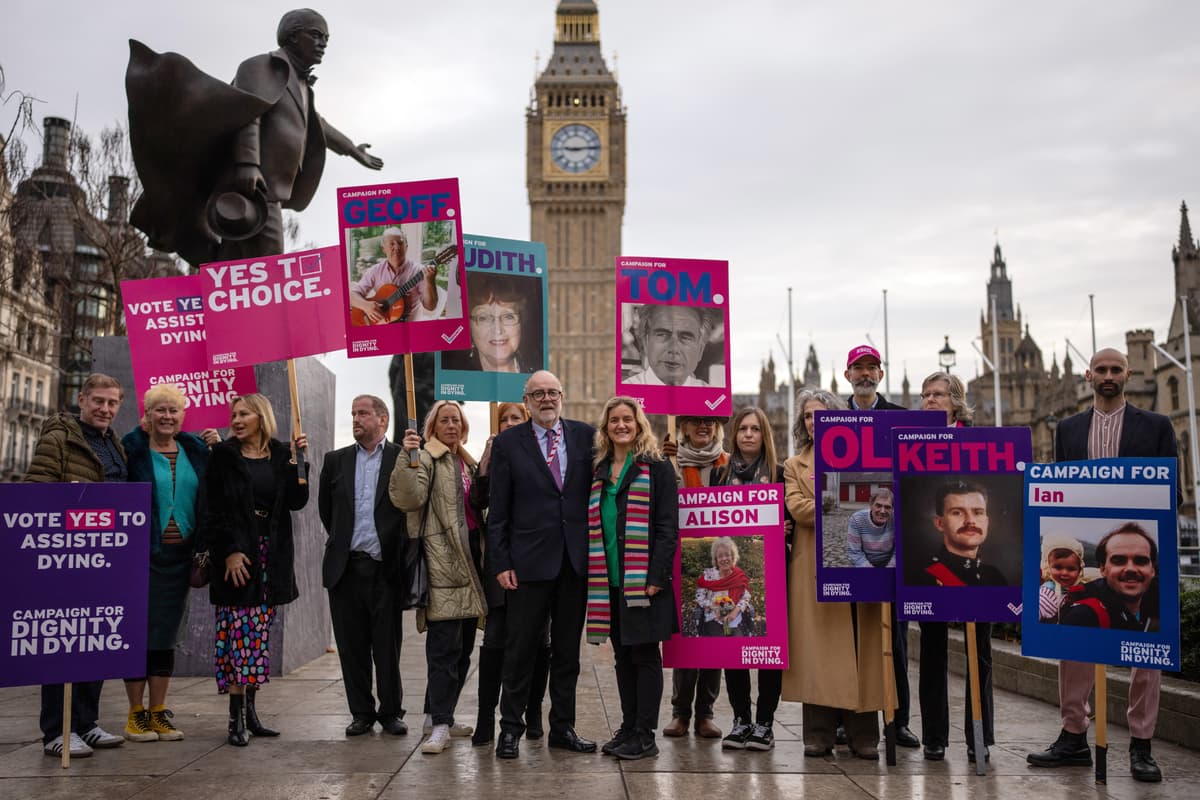

Britain’s Labour party is hitting a roadblock in its rush to impose an assisted suicide law in the United Kingdom — the resistance of the House of Lords. Though the long-lived upper house of Britain’s parliament lacks power to reject outright the legislation, the Lords can delay the measure. Of that opportunity, it seems, that the lords are taking full advantage, proposing more than 1,000 amendments to the bill. It could yet prove to be among their finest hours.
After all, if the assisted suicide bill doesn’t make its way through parliament by Spring, when the current session ends, the legislation will — pardon the pun — expire. Advocates of legalizing assisted suicide are dismayed. A pro-suicide group that calls itself Humanists UK complains that “it would take two decades to debate all the current amendments.” The humanists fret that there is “a serious danger of the Lords losing its democratic legitimacy.”
What is more democratic, though, than to foster more debate — and scrutiny — on a measure that, per the BBC, “continues to generate huge controversy, with passionate arguments for and against”? Backers of assisted suicide want to push through the bill despite concerns about a lack of safeguards. “The process must be as simple as possible for the vast majority of straightforward cases,” insists a My Death, My Decision board member, Dave Sowry.
Yet when the bill was before the Commons, critical MPs warned that the law’s “insufficient” guardrails, per the BBC, could “put vulnerable people in harm’s way.” Right To Life UK reports that the 47 amendments in the Commons earned less than five hours of debate, so “each amendment received just less than six minutes of scrutiny.” In the Lords, Baroness Tanni Grey-Thompson is pointing to risks for pregnant women, the homeless, and prisoners.
These concerns echo the position of England’s Catholic bishops, who point to “human reason, as well as religious faith” to argue that “there can be no safe or limited assisted suicide law.” Even the term “assisted dying,” the bishops reckon, is deceptive. They call it a “euphemism” suggesting that “assisted suicide means compassionate assistance in dying,” as opposed to the reality of “the prescription of lethal medication.”
The bishops warn too, of the danger under an assisted suicide regime to the disabled, who could “become disillusioned with their lives to the extent that they see death as preferable.” The error of euthanasia advocates, the bishops assert, is “reducing the value of life to its physical or psychological capabilities.” The same logic applies across the pond, where Governor Kathy Hochul is weighing whether to sign a bill in New York to legalize assisted suicide.
The Church of England’s Archbishop of Canterbury cautions that the option of assisted suicide can lead to people, even if they are not terminally ill, “asking for this, or feeling pressured to ask for it.” He fears that “people would feel compelled to ask to die if they felt like a burden,” the BBC reports. The archbishop is in a position to act on this concern, because he sits, along with 25 other prelates — the Lords Spiritual — in the upper house.
That reflects the robust role for the Church, and the Lords, under Britain’s “unwritten constitution.” Unlike America’s Constitution, which requires super-majorities in Congress and the States to amend, Britain’s governance can be altered by a simple majority. Labour is eyeing using that means to “reform” the Lords — meaning, further diminish the upper house’s powers. The debate over assisted suicide, though, may save their lordships.

