Bipartisan Health Care Reform Push Officially Dead With Millions Set To See Premiums Rise Next Year
Both Republican and Democratic leadership are keeping the vast majority of their members in line as America heads towards a cliff.
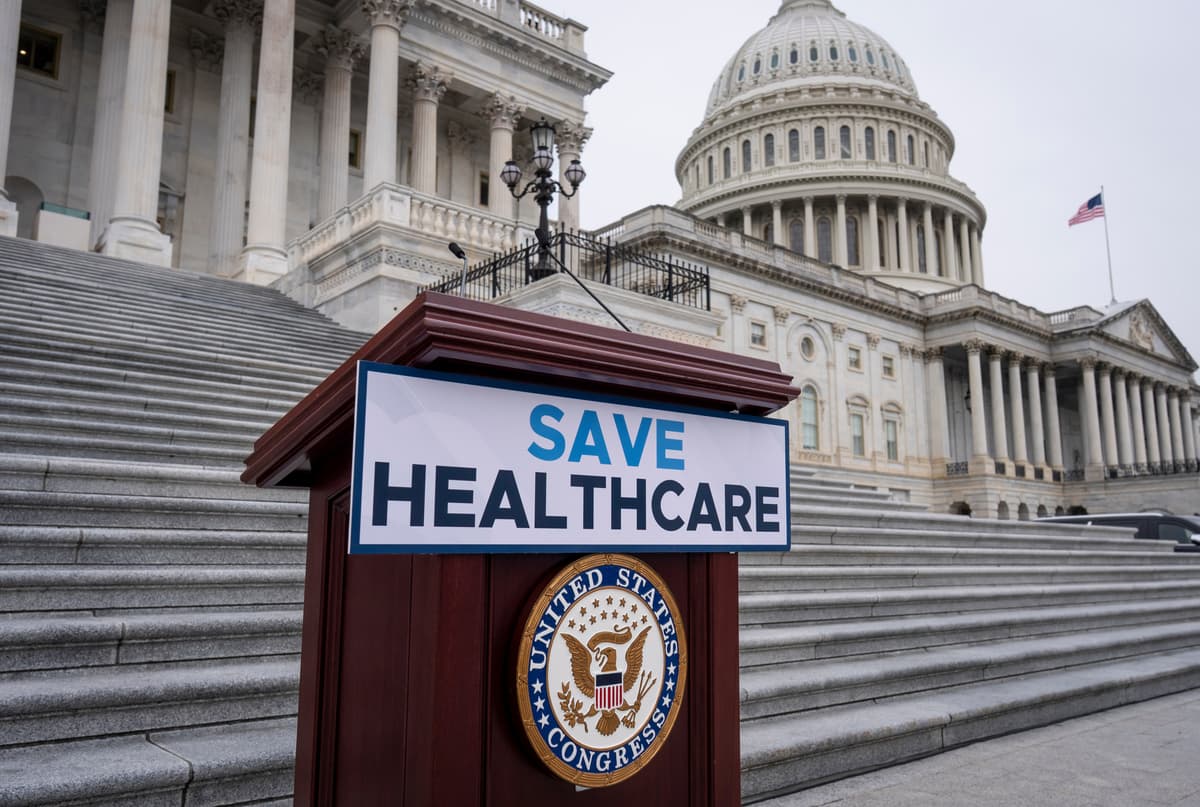

Bipartisan efforts to prevent a dramatic spike in health insurance premium costs will not succeed before the end of the year, lawmakers made clear on Monday. Both Democratic and Republican leaders cajoled their colleagues into staying on their respective sides rather than sign on to two bipartisan bills.
The looming increase in health care costs will kick in next year, after Republicans declined to extend Biden-era Affordable Care Act tax credits. Democrats scheduled the subsidies to expire at the end of 2025 as part of their Inflation Reduction Act more than three years ago.
Democrats went so far as to shut the government down over the subsidy issue. Lawmakers said that they would not agree to fund the government until the GOP agreed to extend the tax credits for a period of time.
After no such deal emerged and the government re-opened, small groups of Republican and Democratic lawmakers began having discussions about how to extend the tax credits before the end of the year. Though those bills did materialize, neither Speaker Mike Johnson nor Congressman Hakeem Jeffries were interested in a broader bipartisan deal.
“From the very beginning, Republicans have made their intentions clear: They don’t want to see the Affordable Care Act tax credits extended,” Mr. Jeffries told reporters at the Capitol on Monday night. Mr. Johnson is putting a bill on the floor this week aimed at reforming the American health care system, though it does not extend the subsidies.
Mr. Jeffries says the House is entitled to an “up-or-down vote” to extend the tax credits, though Mr. Johnson has refused to allow that to happen.
“All we need are four House Republicans to join us,” Mr. Jeffries said, urging lawmakers to join his bill to extend the subsidies until the end of 2028.
His colleagues, however, have embraced bipartisan changes to the tax credit system — changes that Democratic leadership does not support.
“It’s a time-sensitive matter, and it’s an existential matter for, you know, people back home who really care about this … very real problem,” Congressman Brian Fitzpatrick, a Pennsylvania Republican who crafted one of the bipartisan bills told reporters last week. He is one of only three GOP lawmakers representing a district won by Vice President Kamala Harris last year.
“Too many … are not connected with their districts where they’re actually hearing what we’re hearing,” Mr. Fitzpatrick said of his colleagues. His bill currently has 24 supporters — 12 Republicans and 12 Democrats.
Another bill from Democratic Congressman Josh Gottheimer and Republican Congresswoman Jen Kiggans has the support of 40 House members from both sides of the aisle.
Rather than accept either one of those proposals, both Messrs. Johnson and Jeffries say that they are sticking in their own corners.
“We have a unified Democratic position — all 214 House Democrats have made clear: the best path forward is a straightforward extension” of the subsidies, Mr. Jeffries told reporters on Monday.
Mr. Johnson’s bill, which will receive a vote on Wednesday, will likely pass on a party-line basis, though it is dead-on-arrival in the Senate. A similar bill from Senator Bill Cassidy failed last week with zero Democrats voting in support. Any health care reform bill requires 60 votes to advance in the upper chamber.
President Trump has backed congressional Republicans’ position over the course of the last few weeks, and reiterated his position on Monday.
Speaking to reporters in the Oval Office, Mr. Trump said that he would be happy to see the subsidies lap at the end of the year.
“I’d like to see the people get the money” rather than the insurance companies, he said, even though the insurance companies who receive the tax credits are legally required to pass on all savings to consumers. “Obamacare was set up … for the benefit of the health insurance companies,” the president said.
“They’re making billions and billions of dollars,” Mr. Trump told reporters. “I don’t wanna give them anything.”

