Germans, Readying Against Islamist Terror, Are Fortifying Christmas Markets
Vandalism at churches is escalating, as ‘all taboos have now been broken.’
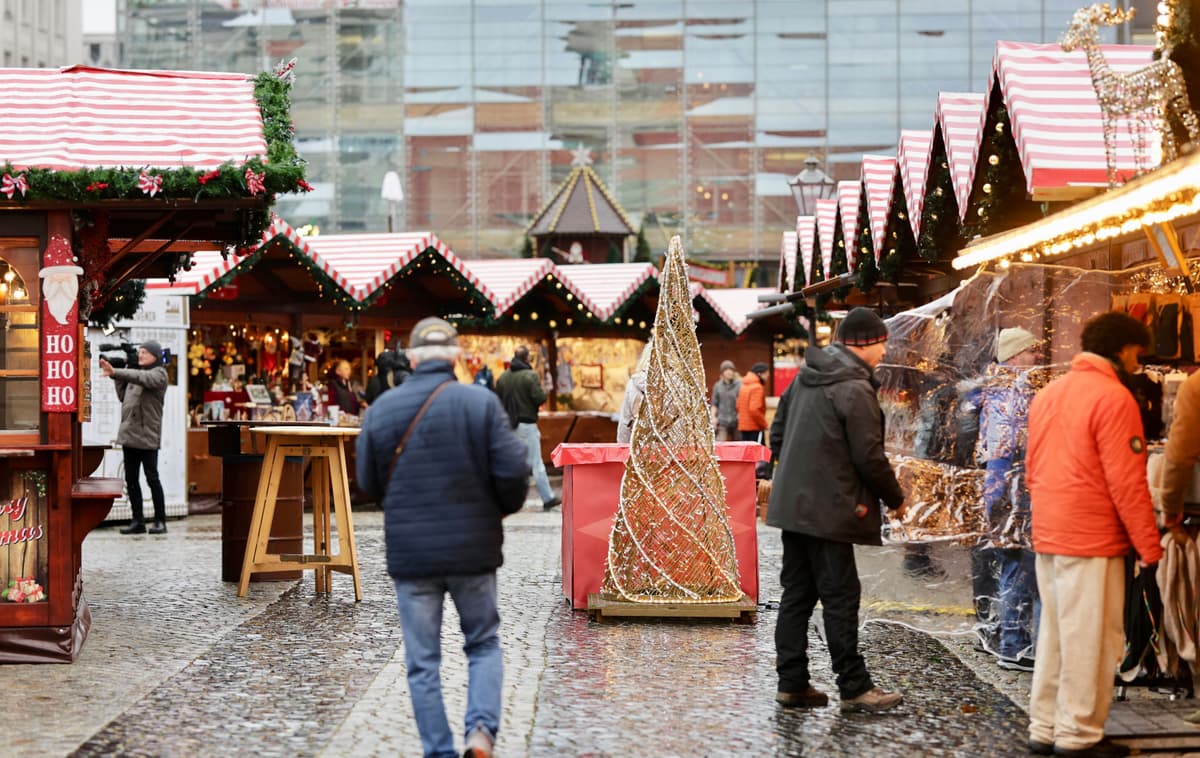

With the Christian Advent season starting Sunday, several German towns are abandoning a tradition that dates back to the Middle Ages — Christmas markets. German cities that will hold the traditional outdoor markets are offering more than stalls selling mulled wine, grilled bratwurst, and hand dipped candles. To reassure the public, the markets feature surveillance cameras, plainclothes police officers, and concrete barriers.
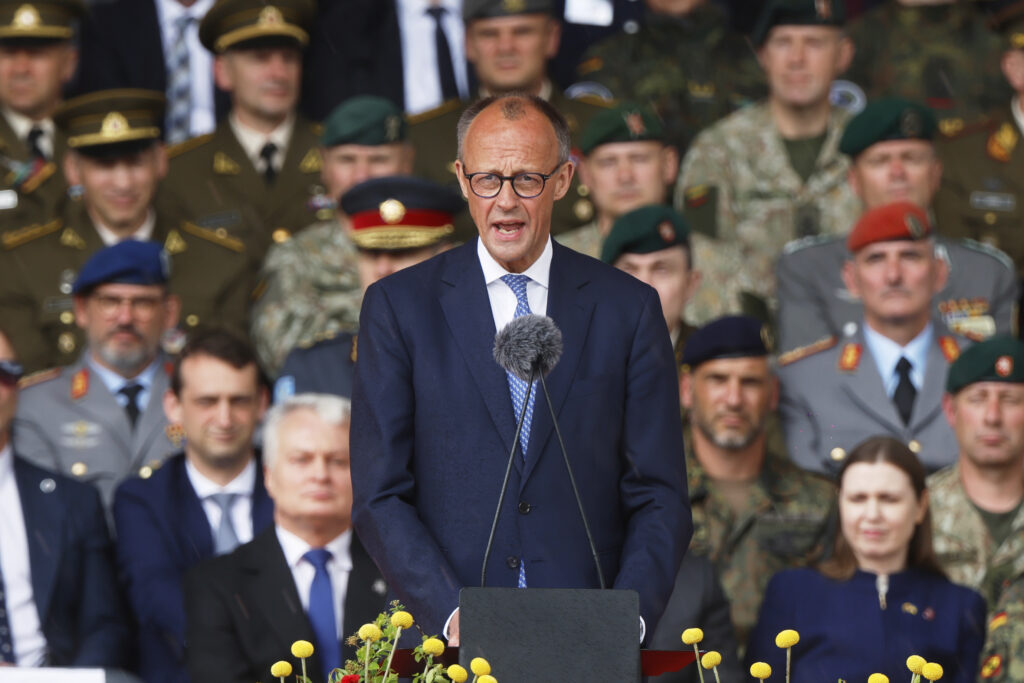
Security needs pushed up the cost of holding public markets by 44 percent since 2023, according to a new, nationwide survey conducted by Germany’s Federal Association of City and Town Marketing. Chancellor Friedrich Merz attended the opening of Halle’s market last week and told the Bild newspaper: “It weighs heavily on me that we can no longer hold Christmas markets even in smaller towns without a comprehensive security concept.”
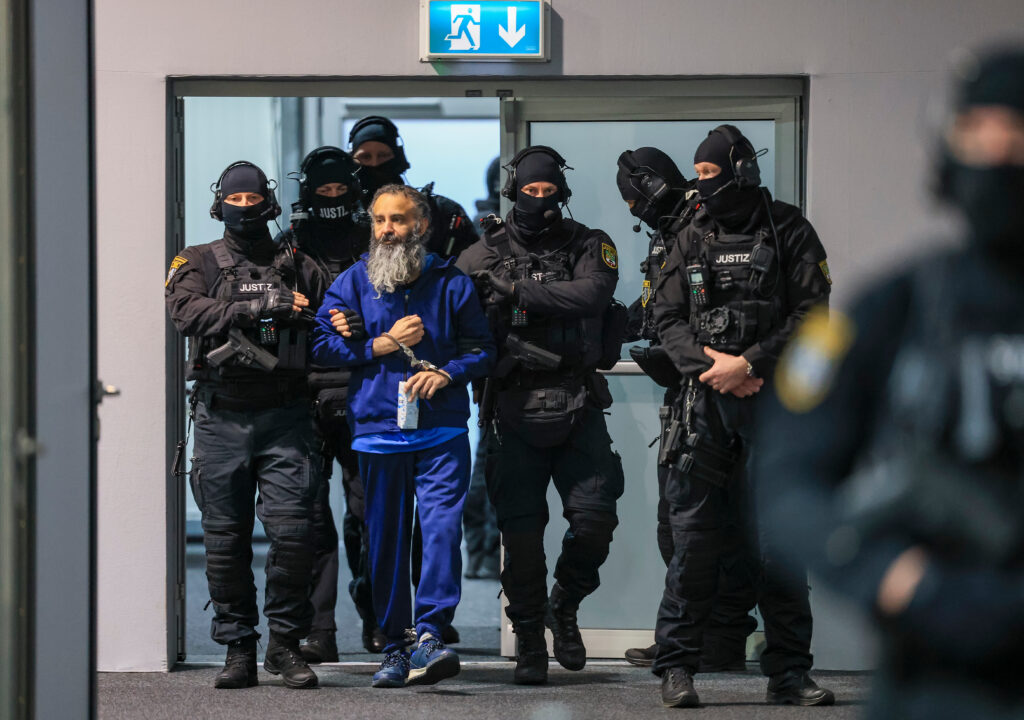
In recent years, terror attacks have been carried out — or thwarted in — Berlin, Dijon, Magdeburg, Nantes, Potsdam, Strasbourg, and Vienna. Offering a fresh reminder, a trial is now under way at Magdeburg of Taleb al-Abdulmohsen, a 51-year-old Saudi immigrant. On December 20, he allegedly rented a BMW X3 and drove into the emergency exit of Magdeburg’s Weihnachtsmarkt. Today, he is charged with six counts of murder and 338 counts of attempted murder.
Two months later in Bundestag elections, that terror attack bolstered the hard-right, anti-immigration party Alternative for Germany. With the AfD now slightly topping Mr. Merz’s ruling conservative coalition in opinion polls, the chancellor is trying to steal the anti-immigration issue. Since May, Germany’s government says it has turned away 20,000 potential immigrants at border stations.
After an AfD branch issued campaign flyers resembling flight tickets and labeled “Abschiebetickets,” or “deportation tickets,” Mr. Merz’s government responded by flying a planeload of 81 Afghan convicts back to Afghanistan. Bolstering anti-immigration politicians are polls indicating that majorities of Germans want an end to Muslim immigration and fear that “Islam will become too strong in Germany.”
As press taboos lift, Germans discover that immigrants are responsible for a disproportionate amount of crime in their traditionally low-crime nation. Last year, non-German suspects accounted for 42 percent of all reported crimes, while they represented about 17 percent of the population.
In 2023 in Germany’s most populous state, Northern Rhine-Westphalia, a police study leaked to Die Welt newspaper found that foreigners accounted for 80 percent of pickpocket suspects, 48 percent of shoplifters, 47 percent of burglars, 42 percent of homicide suspects, and 37 percent of suspects in violent sex crimes.
Germany has taken in 1.3 million Ukrainian refugees over the last four years, but they are primarily women and their children. After Chancellor Angela Merkel relaxed border controls between 2015 and 2016, about 1 million young men from Syria, Afghanistan, and Iran moved to Germany. Berlin’s police chief, Barbara Slowik, told reporters last year: “Bluntly stated, our numbers show that violence in Berlin is young, male, and has a non-German background.”
Many Germans complain that Muslim immigrants are slow to learn German, to adapt to Western culture, and resist the religious tolerance of modern Germany. Muslims account for 7 percent of Germany’s 84 million people, and a University of Bielefeld survey showed that 19 percent of Germans believe Islam is compatible with their culture.
This winter’s fortification of Christmas markets reflects a wider defensiveness about anti-Christian attacks. Last year, Germany had the highest number of arson attacks against churches in Europe, 33, according to an annual survey of ant-Christian hate crimes released last month by a Vienna-based private group, the Observatory on Intolerance and Discrimination against Christians in Europe. Last year, there were 337 anti-Christian hate crimes reported to German police, almost triple the level of 2022.
“What is truly escalating is the nature of the church vandalism. All taboos have now been broken,” a spokesman for the German Bishops’ Conference told the Rheinische Post newspaper last summer. “For several years now, we have been dealing with a significantly heightened level of violence: excrement in holy water fonts and confessionals, decapitated statues of Christ and saints, cigarette butts and other litter in front of devotional images, damaged prayer and hymn books, overturned pews, smashed windows, altarpieces, and entire altars destroyed by arson.”
Back at Magdeburg, a central German city that Charlemagne founded on the River Elbe, the Glühwein once again is flowing for adults and the Kinderpunsch for children at the traditional “Holy Night Market.” With spending by 2 million visitors at stake, the normal array of more than 140 Christmas stands opened on schedule, on November 20.
Initially, state officials refused to grant approval. To ease safety fears, fair organizers followed the lead of cities across Europe this holiday season. They invested almost $300,000 in security measures, including car-proof concrete bollards.

