How Trump Can Make the Americas Great Again
America’s president is fighting to prevent half of the Western Hemisphere from being dominated by cartels, communists, and Communist China.
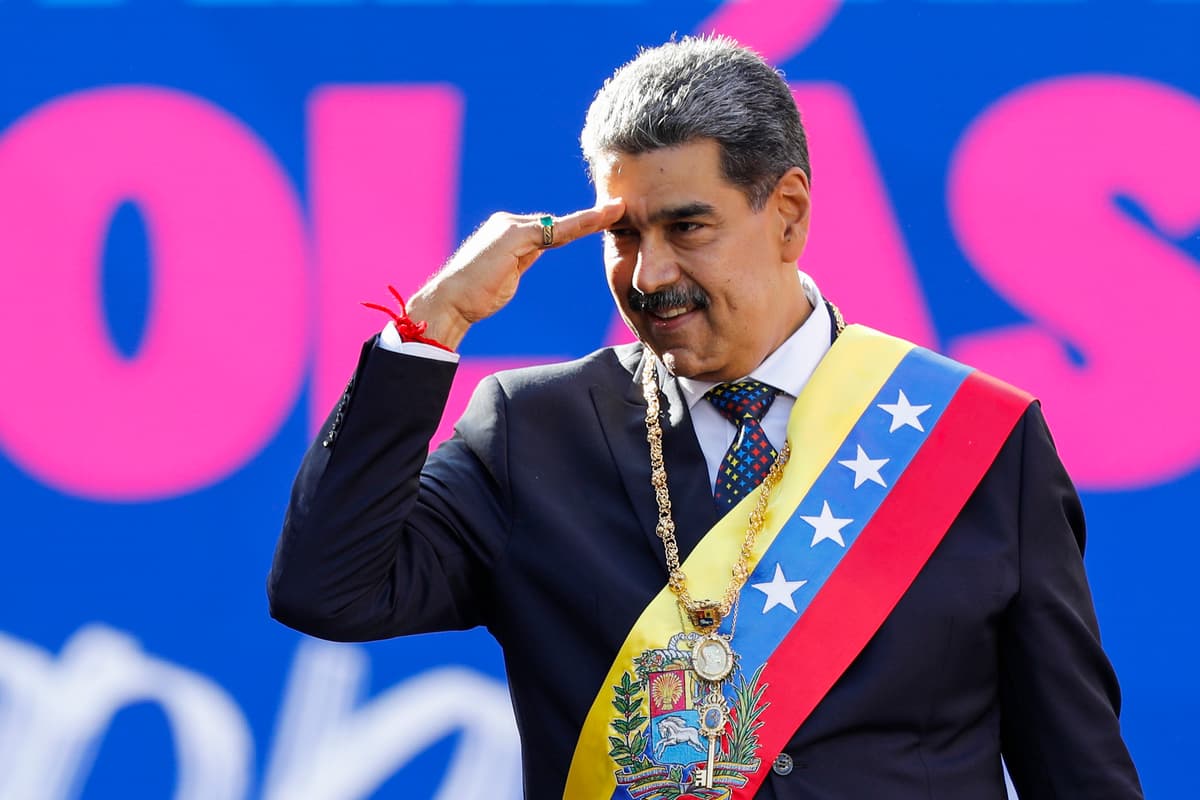

President Trump is in a fight for the destiny of the Americas.
Will Central and South America be free and aligned with the United States — or will half of the Western Hemisphere be forever plagued by cartels, communists, and Communist Chinese influence?
The Cold War in Europe ended more than 30 years ago, but it never really ended in our own backyard.
Cuba remains communist, and a little more than a decade after the Soviet Union collapsed, Venezuela joined the ranks of socialist dictatorships under Hugo Chavez and then Nicolas Maduro.
Whenever left-wing leaders come to power in the region, the United States and capitalism are their favorite targets.
Yet in those countries that, unlike Cuba and Venezuela, have a measure of democracy, the consequences of socialism eventually bring about regime change at the ballot box.
Bolivia is a case in point: After 20 years of misrule by the Movement for Socialism, Bolivians rejected the party long led by Evo Morales so completely its candidate didn’t even make the final round of the presidential election on Sunday.
Instead, voters chose between a strong conservative, Jorge Tuto Quiroga, and the centrist Rodrigo Paz — whose running mate, Edmand Lara, is a former police captain with law-and-order appeal.
Both candidates wanted better relations with Washington, Secretary Marco Rubio noted.
Mr. Paz won and has wasted no time in saying diplomatic relations with America, severed by Ms. Morales in 2008, would be restored.
But Latin American nations like Bolivia can’t flourish — or become reliable friends of ours — if they revert to socialism every few election cycles.
This is why Mr. Trump takes such a strong interest in the fate of Javier Milei’s government in Argentina.
Mr. Milei is a free-market reformer — indeed a drastic one even by our standards, let alone Latin America’s.
His reforms have had some success but have also engendered an electoral backlash on the left, which in turn has spooked bond markets and weakened the peso, frightening even middle-class voters.
Next week’s legislative elections in Argentina will be a referendum not only on Mr. Milei but on the free market itself; a disastrous showing by Mr. Milei’s party will put the country on the road back to socialism.
Mr. Trump has angered some libertarians here at home by arranging a $20 billion currency swap — strong dollars for weak pesos — to shore up the Argentine economy.
Another $20 billion in aid is on the table, and Mr. Trump provoked the fury of America’s beef lobby on Sunday by saying he’d increase Argentine beef exports to our country, in part to keep prices down in our supermarkets.
First foreign aid, now trade that favors a foreign producer — is Mr. Trump betraying his America First agenda by putting Latin America first?
Hardly — he’s looking at the big picture in the Western Hemisphere the same way our most far-sighted statesmen looked at the Cold War in Europe.
The contrast between Western Europe’s prosperity and Eastern Europe’s poverty — not to mention the bare supermarket shelves in the Soviet Union itself — demolished communism’s materialist claims to create plenty for everyone.
The success of free-market economies was as important to victory in the Cold War as the failure of communist economics.
Yet Western Europe suffered its share of economic crises — and when our allies stumbled, America was ready to help them up, especially during the critical transition from the devastation of World War II to the establishment of functional post-war economies.
Helping friends in Latin America weather the storms that come with reforming stagnant socialist economies is a smart long-term investment for Washington, not just in our hemispheric security but in our prosperity as well.
These investments help crowd out China’s financial inducements for aligning with Beijing.
What message do we send if we don’t help our friends, while China is eager to aid theirs?
The result of that won’t be to spread libertarianism in Latin America, nor will it help our domestic producers or enhance our security.
The result will be just the opposite — more socialism on our doorstep, leading to more drug trafficking as a path to profit in dysfunctional economies and more mass immigration away from those failing economies.
Instead of us, China will have favored access to Latin America’s growing markets.
Mr. Trump’s interdictions of Venezuelan boats and the pressure he’s putting on Mr. Maduro’s regime have been making the biggest headlines lately.
Yet what Mr. Trump is doing to help friendly neighbors prosper is the linchpin of his Latin American strategy.
The solution to the dangers we face from Chinese influence and socialist movements in our hemisphere, from the drug trade, and from mass migration is to be found in making the countries closest to us more stable and successful.
The strategy has been proven to work — it did in Europe, and it will in Latin America.
Creators.com

