In Plato and Cicero Biographies, Two Writers Explore Contradictions in Lives of the Revered Philosophers
The books show how necessary biography is to an understanding of how even the greatest thinkers can turn against the very humanity that their ideas have inspired.
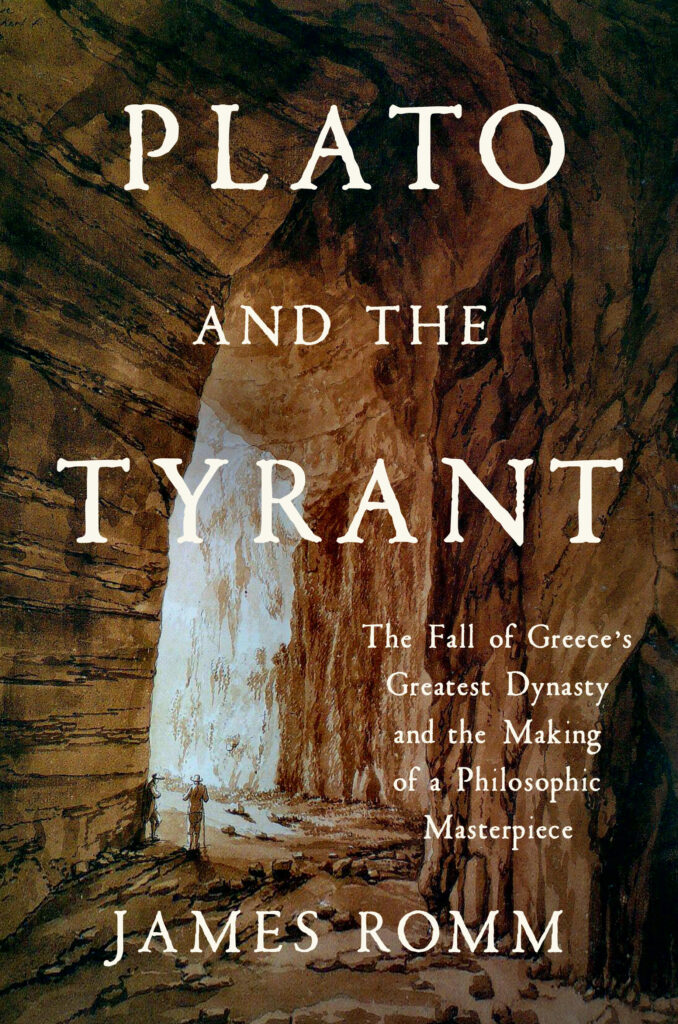
‘Plato and the Tyrant: The Fall of Greece’s Great Dynasty and the Making of a Philosophic Masterpiece’
By James Romm
W.W. Norton, 368 pages
‘Lawless Republic: The Rise of Cicero and the Decline of Rome’
By Josiah Osgood
Basic Books, 384 pages
Plato is a good example of a revered figure, the very epitome of a lofty philosopher, so that for many of his readers biography is an irritant, making him mundane and fallibly human, perhaps picking his nose, as Sylvia Plath admitted to doing in one of her journal entries.
James Romm begins his riveting book by confessing his own susceptibility to philosopher worship, overlooking disturbing elements of Plato’s masterpiece, “The Republic,” which his students irreverently challenged: “The ‘ideal’ city-state imagined by Plato looked more nightmarish than utopian to my students; it features all-powerful rulers backed by fanatical soldiers, censorship of art and literature, and state control of private life at a level that rivals modern-day North Korea.”
Mr. Romm tried to suggest Plato was only being provoking, presenting ideas in dialogue that “he didn’t support,” but the students weren’t having it, and, Romm admits, “I wasn’t sure I believe that argument myself.”
At issue as well are the letters Plato wrote, some of them quite disturbing, revealing him as a flawed man of considerable misjudgment. For centuries scholars have debated the veracity of the letters, especially since forgeries in ancient times were quite common. Mr. Romm carefully sifts through the arguments of philosophers and historians, the former tending to dismiss and the latter to validate at least some of the correspondence, which “Plato and the Tyrant” seeks to endorse.
Quite aside from whether Mr. Romm proves his case are the disturbing questions that get at the heart of any biographical study of Plato: “Did Plato, while extolling the Good as the source of transcendent joy, end up collaborating with evil? Had He sought benevolent ends by using unsavory means? How far had he bent the noble ideals of Republic — its unwavering commitment to justice — when he entered a world where injustice prevailed? Was it Thinkable — the most troubling question of all — that he’s written Republic in part to explain his missteps in Syracuse, or to obscure them?”
Those questions lead to Mr. Romm’s ultimate question: Did Plato in his dealings with the tyrants of Syracuse demonstrate that the “wise can become more tyrannical by the company of Tyrants?”
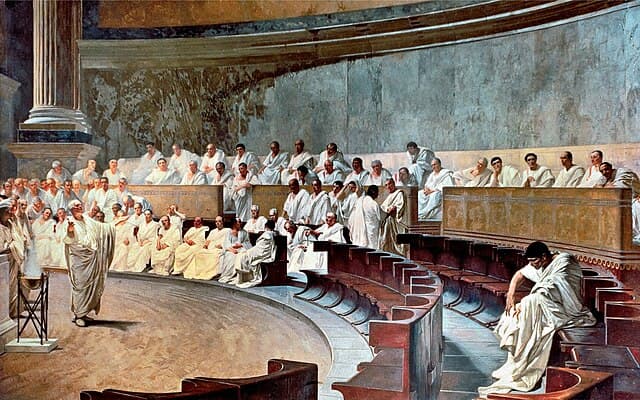
Josiah Osgood in “Lawless Republic” practically picks up where Mr. Romm leaves off, depicting Cicero as the brilliant trial lawyer, developing the law as a powerful defense of the accused, gaining thereby a powerful political post in a crime-ridden Rome that corrupted Cicero’s very devotion to the law into a subversion of it.
In order to maintain his place in a deteriorating society, Cicero amassed considerable wealth and a concomitantly prestigious position among the upper classes, with precarious results that led to temporary exile and then a return to Rome, advocating the necessity of violence in order to restore order.
Cicero’s life, as Mr. Osgood shows, is suffused with irony: “In times of war,” Cicero declared, “the laws fall silent.” This was the sort of thinking, Mr. Osgood points out, that led to Caesar’s assassination, which Cicero defended. The great trial lawyer had thus broken trust in the law as a governing principle of society.
Mr. Osgood is not concerned with Cicero’s biography as such, but with the questions it raises: “How, after an outbreak of violence, do you restore the rule of law? How do you protect against the threat of domestic terrorism without suppressing civil liberties? How do you hold to account those who incite violence?”
Like Mr. Romm, Mr Osgood has no definitive answers to his questions, but the work of both scholar/biographers suggests that a society that stops asking such questions is lost. That both Plato and Cicero in these books seem to have been capable of turning themselves into the opposites of their better selves also conveys just how necessary biography is to an understanding of how even the greatest thinkers can turn against the very humanity that their ideas have succored and inspired.
Mr. Rollyson is author of the forthcoming “Making the American Presidency: How Biographers Shape History” and “Sappho’s Fire: Kindling the Modern World.”

