‘It Was in His Underwear’: Luigi Mangione Had Hidden His Gun Magazine in a Pair of Drawers, Officer From McDonald’s Arrest Tells Court
The defense is seeking to prove that officers knew they were arresting a shooting suspect, discussed whether they needed a search warrant, and proceeded without one.
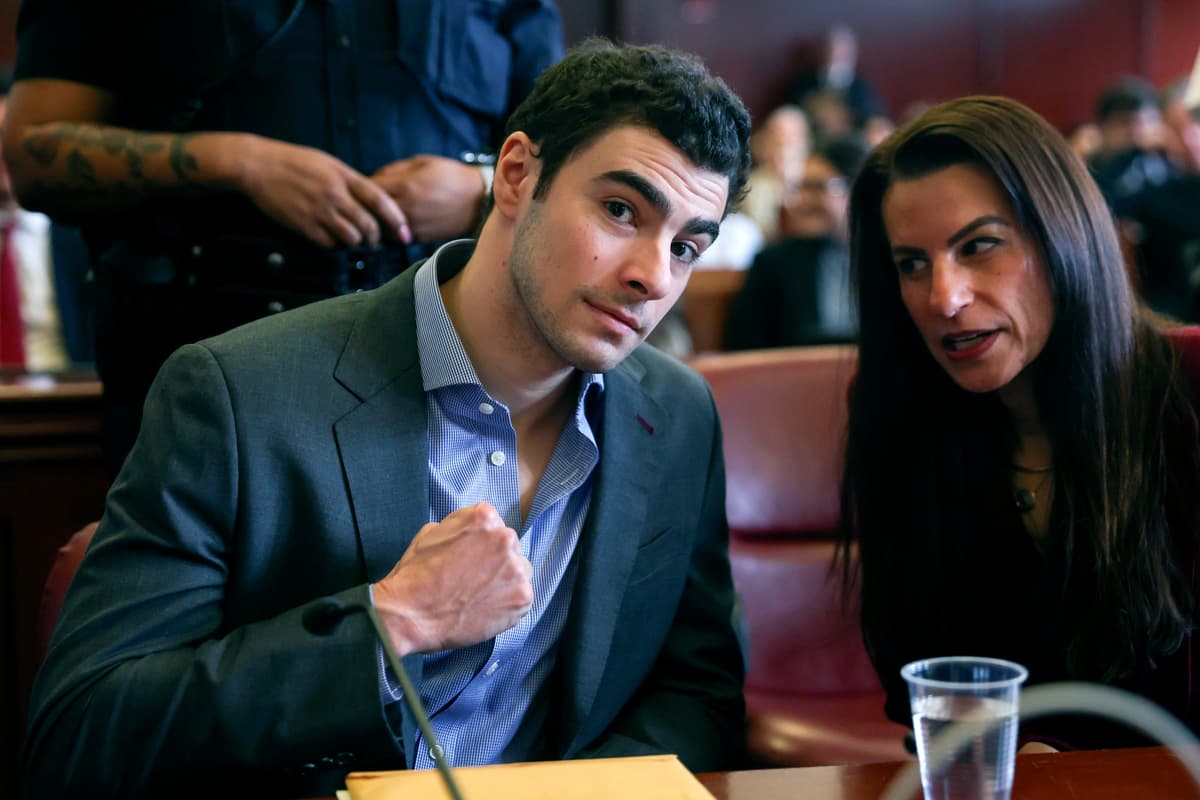

Luigi Mangione set the internet briefly afire on Monday with a modest “fist bump,” captured on still cameras in the courtroom. Inside court, however, the proceedings plodded on with testimony over Mr. Mangione’s backpack.
New York state prosecutors, who have charged Mr. Mangione with the murder of the CEO of UnitedHealthcare Brian Thompson, questioned the arresting officer, who searched his backpack, during the ongoing pretrial suppression hearings at Manhattan criminal court.
“I’d like to check it (the backpack) now, I wanna make sure there is nothing in there that’s gonna… ” Patrolwoman Christy Wasser, who was seen on body-worn camera footage speaking to another police officer, could be heard saying as she made a gesture indicating an explosion. Local police officers had just arrested Mr. Mangione at a McDonald’s outside Altoona, Pennsylvania, about 277 miles from New York City, where Thompson had been gunned on a midtown Manhattan street five days earlier.
Bodycam videos from the arrest were shown at court on Monday, where Officer Wasser had been called to the witness stand. An assistant district attorney, Joel Seidemann, asked the patrolwoman why she had decided to search Mr. Mangione’s backpack at the McDonald’s and not at the police station.
“I didn’t want him to pull a Moser,” Officer Wasser told the prosecutor, who asked her to clarify.
“Moser was an officer at our department,” she explained. “Officer Moser brought a bomb back to our station. I didn’t want it to happen to me.”
Defense attorneys for Mr. Mangione, who has pleaded not guilty to the murder charges, requested the ongoing pretrial suppression hearings in an effort to suppress key evidence from the upcoming trial. According to their motion, the arresting officers violated Mr. Mangione’s rights when they failed to follow “basic police procedure” during the arrest. The defense argues that their client was questioned without having read his Miranda warnings for about 20 minutes and that his backpack was searched without a warrant. Thus, the statements he made and the items seized from his backpack should be inadmissible at trial.
Mr. Mangione, who had been sick on Friday, was back in the courtroom on Monday morning, dressed in a gray suit and blue button down shirt, the top buttons open. He made the fist with his right hand, when pool photographers took his pictures and smiled, perhaps indicating that he was ready to fight what appears to be a rather difficult case for the defense.
Officer Wasser, who has been working for the Altoona police department for 19 years, was in her car on patrol, when she heard over the radio that there was a suspicious man at the Macdonald’s on Plank Road, “who resembled the CEO shooter,” she testified. She had seen pictures of the shooting suspect, she said, on Fox News.
She decided to drive to the McDonald’s. When she arrived there were already numerous other officers and supervisors surrounding Mr. Mangione, the body-worn camera showed.
After Mr. Mangione was placed under arrest, handcuffed and frisked, Officer Wasser began searching his backpack, which had been placed on top of a table. Another officer asked if they should maybe take the backpack to the police station to conduct the search there, but she said she did not want to risk a bomb going off and would rather do a search right away.
“What was the first item you removed?” Mr. Seidemann asked.
“It was a hoagie and bread,” Officer Wasser replied. The court saw how she pulled sliced Italian bread and a hoagie out of Mr. Mangione’s backpack on the bodycam footage, which the prosecutor stopped every few seconds to analyze exactly what was going on during the arrest.
The video then showed officer Wasser finding a loaded magazine, which she held up smiling at another officer, who can be heard saying, “It’s f—k him one hundred percent. It’s f—g him,” referring to the New York suspected shooter.
Mr. Seidemann asked where she had found the magazine. “It was in his underwear.” Officer Wasser responded and added. “His underwear was wet.”
She could be heard later telling officers that “Everything is soaking wet,” referring to the contents inside the backpack. She used a different word, however, when questioned by the defense during cross, describing the contents as “damp.” It was unclear what the reason for the wetness or dampness was.
A supervisor cautioned her not to place the wet, or damp underwear on the table, to preserve DNA samples that investigators may want to take from the evidence, and officer Wasser rolled the gray underwear back up and placed it into the backpack again.
The same officer, who had expressed excitement about the man “being him,” could then be heard on video, saying “we’re gonna have to finish it (the search) at the station.” Another officer remarked, “we should get a search warrant.” But yet a third officer, there were eventually 13 officers present during the arrest, said they did not need a search warrant because this was a “search incident to arrest.”
Mr. Seidemann asked Officer Wasser which of the officers ranked higher. And she explained that Sergeant Burns, who said that there was no need to get a search warrant, was the highest ranking officer among the ones discussing the matter.
Legal analyst and former trial attorney, Terry Austin, told the Sun during the lunch break, that “As a law enforcement officer you are allowed to do a ‘search incident to an arrest’ for your own safety, and for the safety of the public. Once the arrest has been made, you are allowed to search either the person or the property to protect yourself and the public.”
“There were two different searches conducted here,” Ms. Austin went on. “The search at the scene and the search at during the intake. The second search was done at the police station. That was the intake search, or inventory search. The way you do an inventory, literally, of everything that the arrested person has in his possession.”
During the inventory search at the police station, which the court also watched via bodycam footage, Officer Wasser found a 3-D printed handgun inside of the front pocket of the same backpack she had begun searching at the McDonald’s. New York investigators later said that the shell casings of the bullets found at the crime scene matched the ghost gun seized from the backpack. Officer Wasser also found a red notebook, which prosecutors have said includes writings of Mr. Mangione, where he expressed his disdain for the healthcare industry and could thus serve as a motive.
In a motion, filed before the hearings began, the defense had asked the judge to bar prosecutors from characterizing the notebook as a manifesto. Defense attorneys are also arguing that the notebook should be inadmissible at trial and argue that calling it a manifesto is prejudicial.
When the prosecutor referred to the notebook as a “manifesto” on Monday, triggering an objection from the defense, the judge told the parties, “This is a hearing, it’s certainly not gonna have an effect on me. But you’re certainly not gonna do that at trial.”
“I’ll bear that in mind,” Mr. Seideman responded.
After the lunch break, lead defense attorney Karen Friedman Agnifilo began her cross-examining Officer Wasser, questioning the arrest procedure and pointing out that there had been a disagreement among some of the officers about whether or not to get a search warrant before searching the backpack.
Ms. Agnifilo also asked the officer if she cleared the McDonald’s, or prevented any of the customers from using the bathrooms, which were located right where the arrest was taking place, to protect civilians from any possible explosive. The officer said she had not. She also admitted that she came to the McDonald’s by herself, after she had heard over the police radio that a suspicious man, who resembled the New York shooter, had been seen at the fast food restaurant. No one had asked her to come to the McDonald’s.
Furthermore, the defense questioned how Officer Wasser could have missed finding the gun at the McDonald’s where she had done a rather thorough search.
The hearings will resume on Tuesday.

