James Comey’s Close Friend Launches Lawsuit at DOJ as Trump Administration Scrambles To Get Prosecution Back on Track
A professor at Columbia, Daniel Richman, accuses the government of ‘callous disregard’ of his constitutional rights.
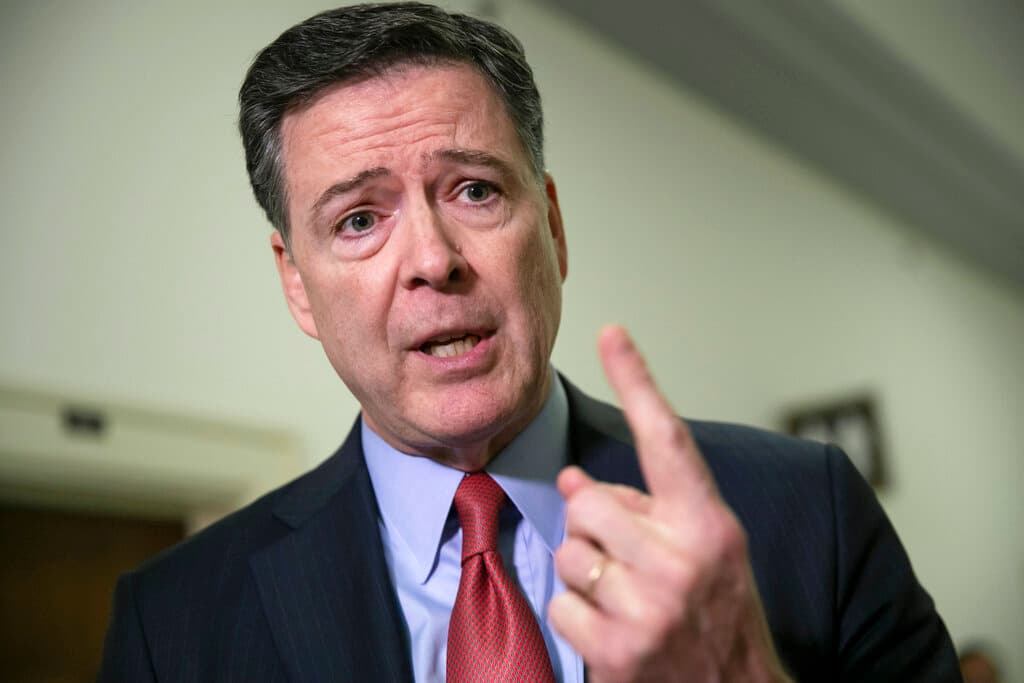

The civil lawsuit filed against the Department of Justice by a consigliere, Daniel Richman, of the former FBI director, James Comey, could throw up another obstacle to President Trump’s effort to convict the former chief spy of lying to Congress.
Mr. Richman is suing over evidence the DOJ collected, pursuant to warrants, from him between 2019 and 2020 — when he was a private citizen and Mr. Trump was in his first term — as part of an investigation called “Arctic Haze.” That was a probe into whether Mr. Comey unlawfully disclosed the contents of a conversation with Mr. Trump — and possibly other documents. The investigation was closed in 2021 without any criminal charges being filed.
The evidence that the government collected, though, made its way, five years later when Mr. Trump had returned to power, to the grand jury that handed up indictments against Mr. Comey this fall. Mr. Richman, a professor at Columbia Law School, is asking a federal court in Washington, DC to issue an emergency order barring the DOJ from using that evidence. He also alleges his constitutional rights were violated. The case against Mr. Comey has been dismissed following a ruling that the lead prosecutor, Lindsey Halligan, was unlawfully appointed. The DOJ vows an appeal.
Mr. Richman has been friends with Mr. Comey for decades. He formally served as an unpaid advisor to Mr. Comey — a “special government employee” — during the Obama Administration. Mr. Richman resigned in February 2017. He accuses the government of “callous disregard” with respect to his rights under the Fourth Amendment.
That clause of the Constitution ordains that the “right of the people to be secure in their persons, houses, papers, and effects, against unreasonable searches and seizures, shall not be violated.” The case has been assigned to Judge Colleen Kollar-Kotelly, an 82 year-old senior judge and an appointee of President Clinton.
The lawsuit declares that “There is no lawful basis for the government to retain any images of Professor Richman’s computer, whether stored on the Hard Drive or elsewhere. The government’s conduct has deprived Professor Richman of his constitutional rights.” Mr. Richman alleges that the DOJ’s handling of evidence “exemplifies precisely the governmental abuse against which the Fourth Amendment was designed to protect.”
Before Mr. Comey’s case was dismissed the magistrate judge overseeing the case, William Fitzpatrick, looked askance at the DOJ’s failure to obtain fresh warrants — the old ones expired — to introduce into evidence the material it adduced from Mr. Richman. Judge Fitzpatrick, blasted the government for its “cavalier attitude towards a basic tenet of the Fourth Amendment” and for adopting a position that allowed it to “rummage through all of the information seized from Mr. Richman … anytime they chose.”
Any definitive ruling on the evidence in the criminal case, though, would have had to come not from Judge Fitzpatrick — he was deputized only to handle initial proceedings — but from the trial judge, Michael Nachmanoff, an appointee of President Biden who formerly served as a public defender in the same district in which Mr. Comey was charged. Ms. Halligan’s dismissal was decided by another judge, Cameron McGowan Currie of South Carolina. Judge Currie was drafted into the case because of the statutory role district court judges have to play in the selection of prosecutors.
Judge Fitzpatrick determined that the material seized from Mr. Fitzpatrick’s devices were the “cornerstone” of Ms. Halligan’s presentation to the grand jury of her case against Mr. Comey. Ms. Halligan’s indictment — which is now void but could be revived if the government triumphs on appeal — alleges that Mr. Richman was the person Comey authorized to leak information to the press about the investigation into Secretary Hillary Clinton. That was in May 2017, after Mr. Richman had formally left his government role.
The government argues that Mr. Comey then lied under oath in 2020 when he was questioned about the leaks. Senator Ted Cruz’s line of questioning in that interaction, though, did not mention Mr. Richman. Instead, the Texan homed in on one of Mr. Comey’s deputies, Andrew McCabe. Mr. McCabe was himself the subject of two criminal investigations. The first was into the probe into Ms. Clinton’s emails. The second was into whether Mr. McCabe authorized an aide to leak material related to a probe into the Clinton Foundation. Mr. McCabe was never charged.
Mr. Richman’s website at Columbia Law trumpets that he “served as an adviser to FBI Director James B. Comey,” and the advice he rendered was of a legal nature. That could introduce another complication into the government’s effort to use material from his file. Messrs. Richman and Comey are likely to argue that much of it is protected by attorney-client privilege and that entering it into evidence would violate that ancient protection.
The DOJ has not yet responded to Mr. Richman’s lawsuit.

