Jitters Over Trump’s Future Confront Republicans as Midterm Elections Loom
When the president turns from attacking Mayor-elect Zohran Mamdani and other Democrats to quarrel with Representative Marjorie Taylor Greene, it is clear that the train is a little off the tracks.


November has been a difficult time for President Trump — and the millions of us who support him and want him to succeed. The affordability issue is making life difficult for most Americans. The longest government shutdown in history disrupted a wide range of activities.
Furthermore, the temporary continuance of government activity through January 30 leaves a host of issues up in the air. Frankly, we could see another shutdown if these issues can’t be resolved in the next 10 weeks.
The growing conflict with those who deeply oppose efforts by Immigration and Customs Enforcement to deport illegal immigrants is turning disruptive in many cities. Hamas is proving more difficult to force into a peace agreement. Russian dictator Vladimir Putin is proving impervious to reason.
There is a clear split on the right between extremist antisemitic — and in some ways pro-Putin — agitators and the larger base of the Make America Great Again movement and traditional conservative activists.
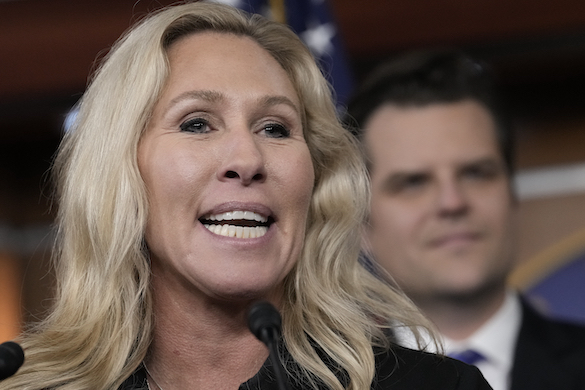
When the president takes time off from attacking New York City’s mayor-elect, Zohran Mamdani, and other Democrats to get into a social media fight with Representative Marjorie Taylor Greene, it is clear the train is a little off the tracks.
The drama of releasing the Jeffery Epstein files drained time and energy from other issues. Public pressure for disclosure forced Republicans to move to virtually unanimous approval from almost unanimous opposition.
Further, there are signs of growing tensions between House and Senate Republicans.
The off-year elections were bad for the GOP. Party loyalists are anxiety-ridden and worried about whether Republicans can keep the House in 2026.
Mr. Trump’s opponents in the press are gleefully celebrating what they see as the final breakdown of nine years of his dominance. Of course, they were sure Russiagate, two impeachment efforts, endless legal attacks, and a host of other things would do it. They were wrong then and now.
I lived through two Republican patterns which historian Arnold Toynbee would have described as cycles of challenge and response. Toynbee, in his magisterial “A Study of History,” published in 12 volumes between 1934 and 1961, argued that the history of civilizations is a history of continuous challenge and response. If a civilization can respond effectively to a challenge, it lives on to face the next challenge.
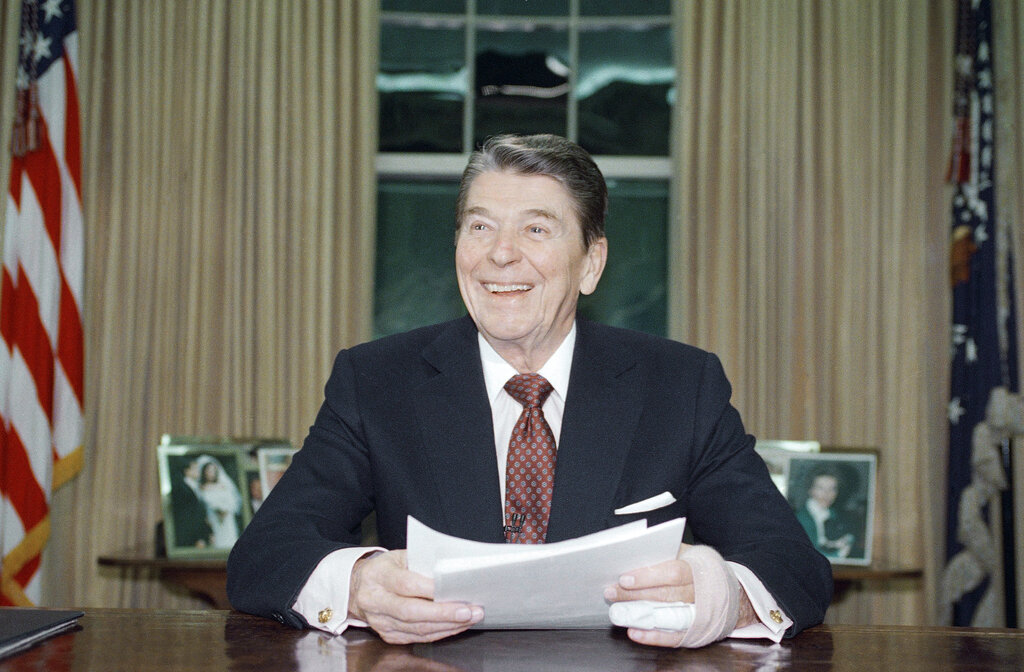
President Reagan was in deep political trouble ahead of the 1984 election. According to Gallup, in January 1983, he hit his all-time low approval rating of 35 percent.
Yet Reagan recovered enough to carry 49 states and defeat Vice President Mondale with 58.8 percent of the popular vote — and a 525 to 13 vote electoral college victory. Mondale only carried his home state of Minnesota.
Reagan correctly responded to the challenge of popular dissatisfaction. Part of the recovery was the implementation of his tax and regulatory cuts. These led to an extraordinary burst of growth.
In the fourth quarter of 1983, the economy grew an extraordinary 12.3 percent. Reagan ran for re-election in 1984 with the slogan “Morning in America,” because it felt like the country was on the way back.
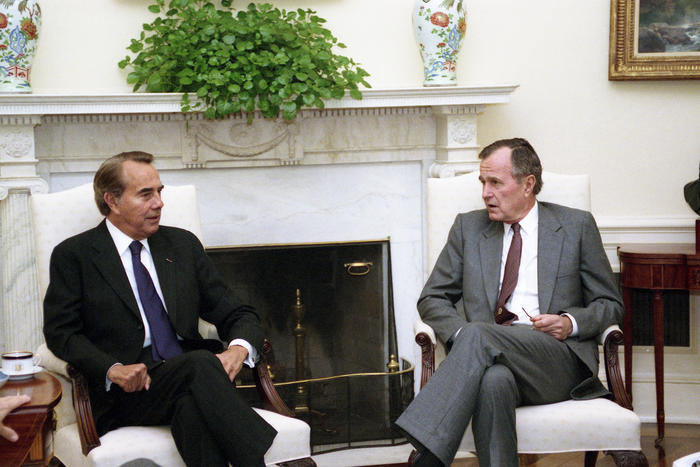
By contrast, his successor, President George H.W. Bush, was at his peak of popular support in October 1991. According to Gallup, 89 percent of the American people had a favorable view of Bush.
This was far higher than anything Reagan ever achieved. In fact, a Pew poll at the same time found that 78 percent of registered voters assumed Bush would be re-elected in 1992.
Instead, Bush violated his own “read my lips, no new taxes” pledge. The emergence of Ross Perot as a third-party independent candidate changed the landscape entirely. In a three-way race, the incumbent who had been at 89 percent approval one year earlier collapsed to 37.5 percent of the vote.
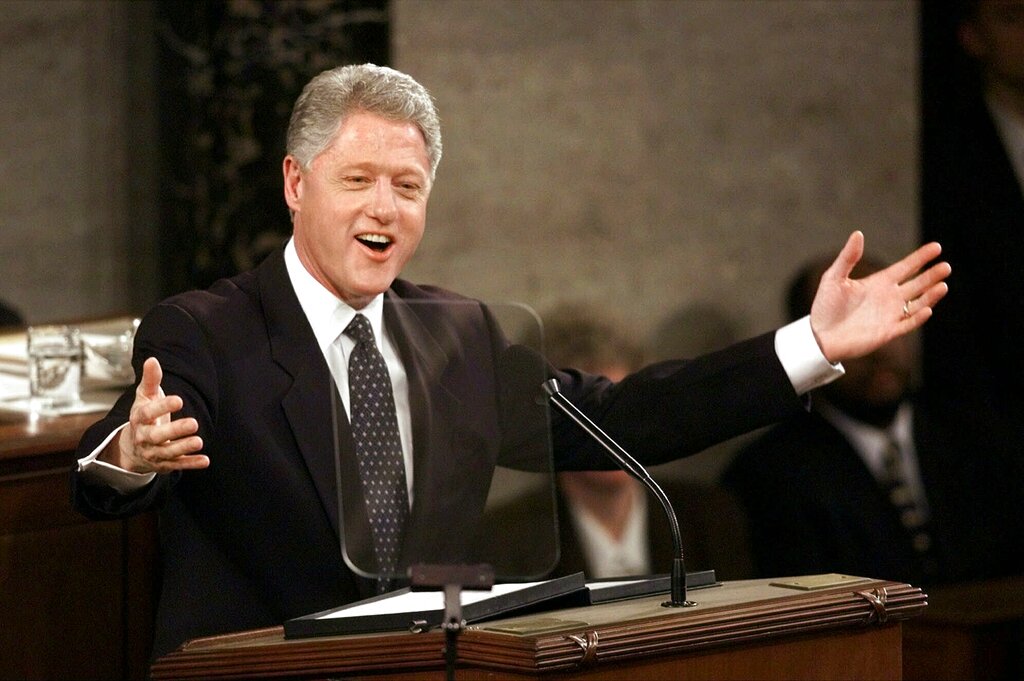
Perot took 18.9 percent, and the Arkansas governor, Bill Clinton, received 43 percent. The electoral college was even more decisive with Mr. Clinton winning 370 votes to Bush’s 168.
As everyone on the GOP side wrings their hands about next year — and everyone on the left cheerfully shouts about the inevitability of their assumed victory — it is worth looking at these two examples.
The lesson is: Governing and campaigning can change everything in a short time.
If Mr. Trump and Republicans pay attention to President Lincoln’s rule that “with public sentiment, nothing can fail; without it nothing can succeed,” they can win an historic off-year election (just as President FranklinRoosevelt’s party did in 1934).
However, if they ignore the wishes, concerns, and passions of the American people, they will lose as decisively as Bush in 1992.
Given Mr. Trump’s track record since he came down the long escalator on June 15, 2015, it is more likely that he will recover like Reagan. However, only time will tell.

