Kushner, Witkoff Head to Moscow as Ukraine’s ‘Sea Baby’ Drone Strikes Against Oil Tankers Escalate Campaign Against Kremlin
After attacking Russian oil pipelines, refineries, and export terminals, Ukraine expands its target list to include ships.

Army secretary Daniel P. Driscoll visited Ukraine for the first time last week. The American informed the Ukrainians that they are losing the war. The Ukrainians nodded politely. Then, after he flew away, they expanded the war.
“Drone attack. Drone attack,” comes a frightened voice in the recording of a ship-to-shore call to Turkey from the Black Sea. “Please help. Mayday.’” It was the captain of a sanctions-busting oil tanker, the Virat, under attack from Ukraine’s extended-range “Sea Baby” drones. After attacking Russian oil pipelines, refineries, and export terminals, Ukraine expanded its campaign last weekend to include oil tankers.
Although Mr. Driscoll is known as President Trump’s “drone guy,” he apparently missed Ukraine’s briefing on the nation’s latest advance in asymmetric warfare — domestically-produced drones that can hit anywhere in the Black Sea.
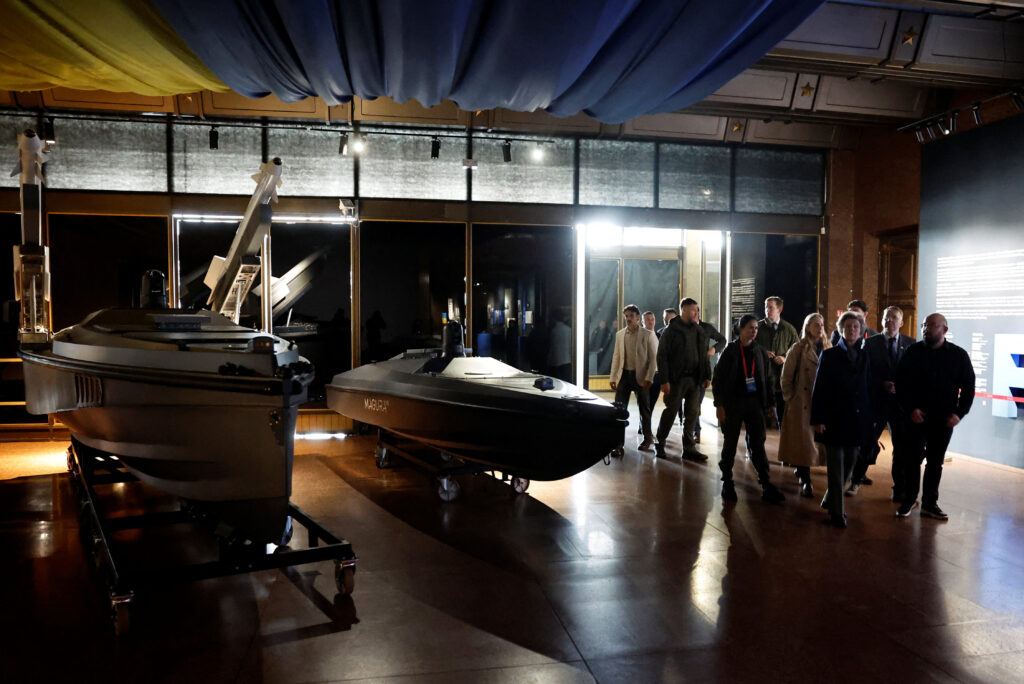
Carrying two-ton payloads, the new Sea Babies have a range of 930 miles, and can use AI to zero in on targets in case communications with Ukraine are broken. With rockets mounted on decks, these drones can hit targets and return to their secret ports for new missions.
Controlled by teams of operators in mobile vans, these drones also can loiter in an area to see if a mission is accomplished. On Friday afternoon, drones hit two of Russia’s “shadow fleet” oil tankers as they moved east along Turkey’s coast, toward Novorossiysk, Russia’s largest oil export terminal on the Black Sea.
On Saturday, Ukraine’s secret service posted daylight videos of the tankers on fire. It also released a black-and-white nighttime video of a second attack on the Virat. Drone controllers evidently kept one kamikaze boat in the area to finish the job. Turkish Coast Guard evacuated crew members safely.
“Video shows that after being hit, both tankers sustained critical damage and were effectively taken out of service. This will deal a significant blow to Russian oil transportation,” an official at the security service of Ukraine, or SBU, told Reuters in an emailed statement.
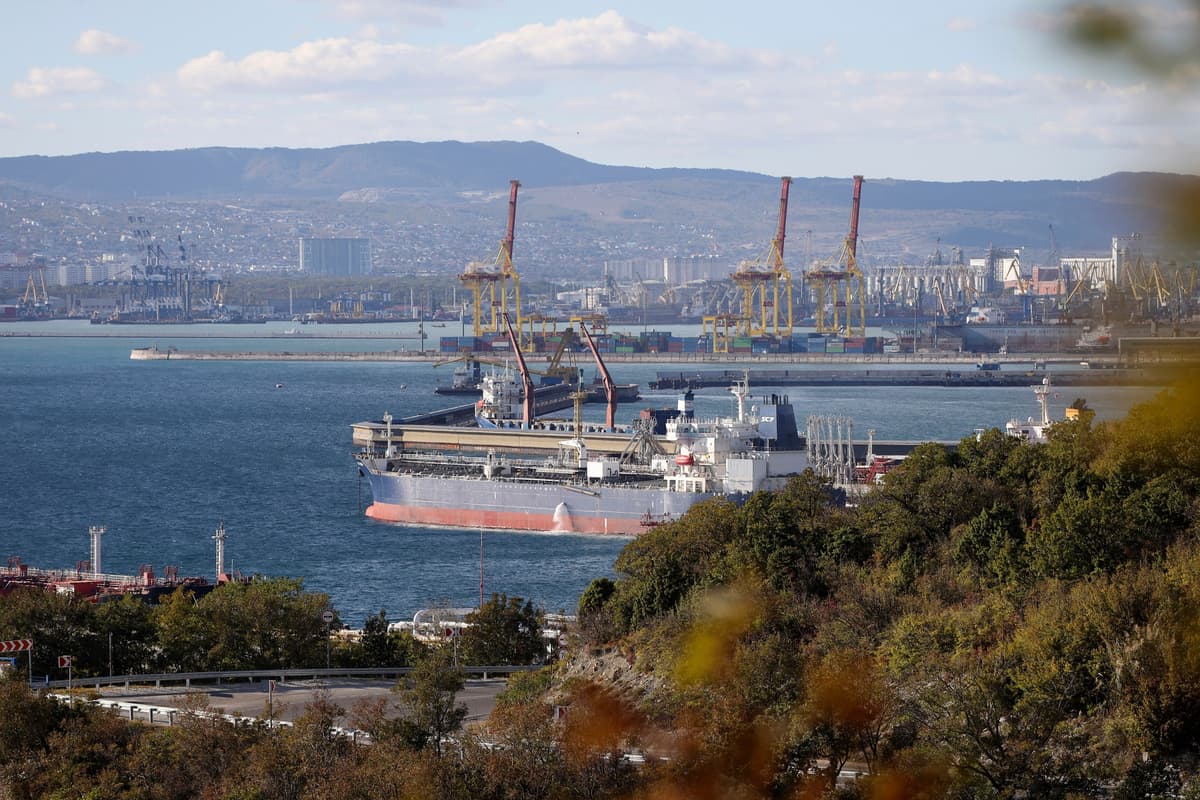
About 20 percent of Russia’s oil exports reach the world through the Black Sea. Now the expansion of Ukraine’s war to attacks on oil tankers could scare ship owners and captains from going to Black Sea ports to take on Russian oil. Owners may decide that the illicit oil trade is not worth risking a $100 million tanker.
This year, the two Gambia-flagged ships hit last weekend, the Kairos and the Virat, were placed under American, British, and European sanctions. The roughly 700 ships that carry Russian oil are often referred to as Russia’s shadow fleet. Yet the vessels’ ownership is often non-Russian.
“The shadow tanker fleet continues to provide multibillion-dollar revenues for the Kremlin bypassing sanctions, disguising its activities under the flags of third countries, using complex schemes to conceal owners and poses significant environmental threats,” the OpenSanctions database says in its website entry for the Kairos, which also goes by a Russian name, Katyusha.
Saturday’s press briefing by Ukrainian security service officials represents the first time that Ukraine claimed authorship of attacks on commercial shipping. Over the last year, several mystery explosions hit ships carrying Russian oil. Today, a Turkish-owned oil tanker, the Mersin, is slowly sinking off the coast of Dakar. After a mysterious explosion in the ship’s engine room, Senegalese authorities evacuated the crew and started transferring the cargo, Russian Black Sea oil.
In an equally important setback to the Black Sea oil trade, Ukrainian drones on Saturday knocked out the Caspian Pipeline Consortium oil terminal at Novorossiysk. Essentially an offshore buoy, this floating terminal handles 80 percent of crude oil exports of Kazakhstan, the world’s ninth-largest oil-exporting nation. The Consortium, which included Chevron and Exxon as shareholders, says it will now reroute exports through Turkey.
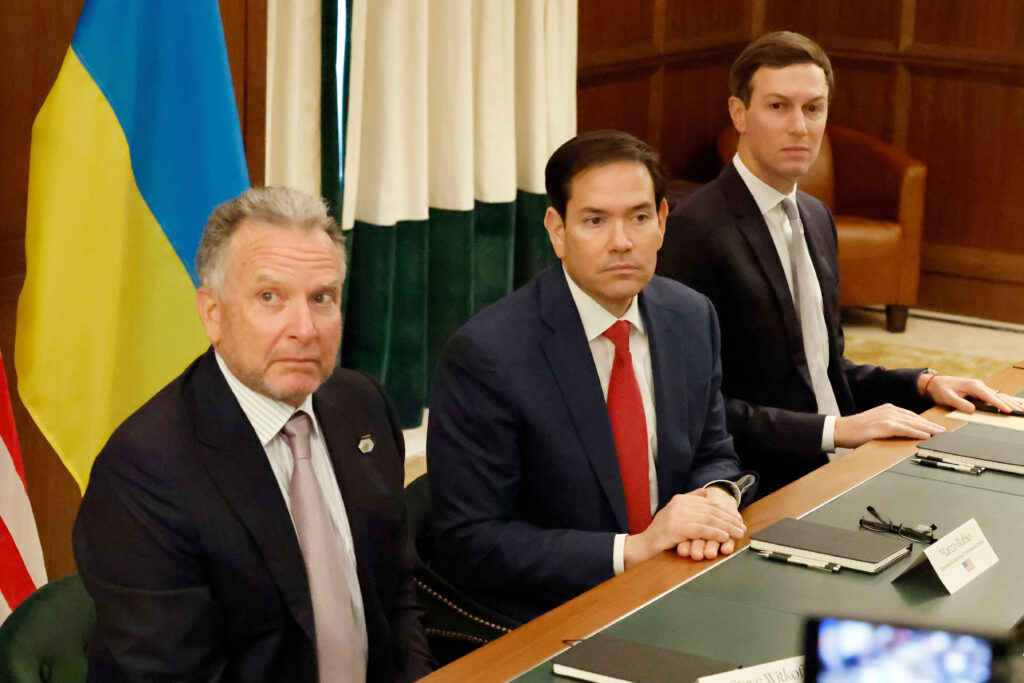
As America’s special envoy, Steve Witkoff, and Mr. Trump’s son-in-law, Jared Kushner, fly tonight to Moscow to resume peace talks, some Trump administration officials insist the Ukrainians have a weak hand. Russia’s foreign ministry says Ukrainian oil industry attacks are “acts of terrorism.” New data suggest that President Vladimir Putin may be bluffing in the peace poker game.
On Friday, Russia’s largest oil exporter, Rosneft, reported that its next income through September is down 70 percent, year over year. The sharp drop was blamed on low oil prices, high Russian interest rates, and “anti-terror security.” This last phrase seems to be a euphemism for Ukraine’s nearly daily attacks on Russian refineries and pipelines.
Fourth-quarter results promise to be worse. Ten days ago, Trump Administration sanctions went into effect against any company dealing with Rosneft and Russia’s second-largest oil exporter, Lukoil. Bloomberg calculates that Russian “oil at sea” — oil without a confirmed destination or buyer — has hit a record 175 million barrels.
In early November, the value of Russia’s weekly oil exports fell to $1.2 billion, Bloomberg also reports. At this level, Russia would earn only $62 billion a year in crude oil exports, about half the $121 billion the nation earned in 2024.
“Sanctions are hitting Russia hard. The export of Russian crude oil is at its lowest,” the European Commission’s top diplomat, Kaja Kallas, posted recently on X. “Tax revenues from oil are the lowest since the war started.”

