Netanyahu Sends Envoy to Lebanon as Israel Explores Unprecedented Cooperation
The meeting between representatives from Israel and Lebanon comes as pressure mounts on Hezbollah to disarm.

An Israeli official arrived in Lebanon on Wednesday in a rare attempt to promote closer cooperation between the neighboring countries.
Prime Minister Benjamin Netanyahu’s office announced that the acting director of Israel’s National Security Council was sending a representative on his behalf “to a meeting with government-economic elements in Lebanon.”
“This is an initial attempt to establish a basis for a relationship and economic cooperation between Israel and Lebanon,” the prime minister’s office said.
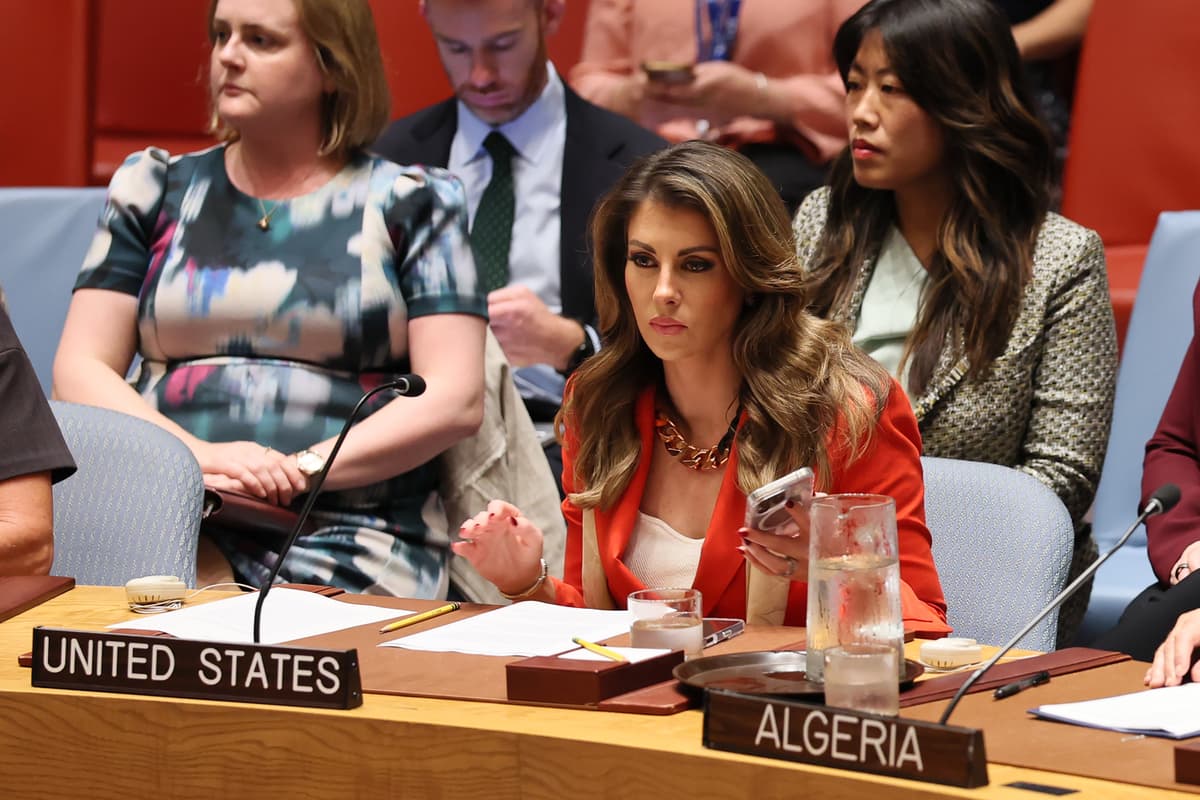
The Israeli envoy, Uri Resnick, participated in a meeting in the Lebanese border town of Naqoura along with the U.S. envoy to Lebanon, Morgan Ortagus, as well as representatives from France and UNIFIL. The purpose was to discuss the “Cessation of Hostilities Implementation Mechanism,” which was established to monitor a November 2024 ceasefire agreement.
Ms. Ortagus met with Mr. Netanyahu, Defense Minister Yisrael Katz and the IDF intelligence chief, Major General Shlomi Binder, in Israel on Tuesday to discuss the rising tension between Israel and Hezbollah.
Israel has grown increasingly frustrated and impatient with the Lebanese government’s failure to disarm Hezbollah, as the ceasefire dictates.
An Israeli military official told The New York Sun that Lebanon’s “operation is not effective at this stage, and we cannot allow it to become merely a façade.”
“We are applying significant pressure for the Lebanese Armed Forces (LAF) to increase its efforts, especially in private homes and strategic underground sites,” the official said.
The Lebanese government’s own deadline for disarming Hezbollah expires on December 31. But the terror group has refused to lay down its weapons and has been caught rebuilding and smuggling weapons from Syria, the official said.
“Hezbollah still has strongholds in Beirut, the Bekaa Valley, and northern Lebanon. They are not going anywhere. Therefore – yes, we will keep coordinating and pushing the LAF to do its job. And when necessary, we reserve the right to act ourselves,” the official added.
Israel’s increased attacks against Hezbollah, including the assassination of its military chief in Beirut last month, have received full backing from America.
“Israel assesses its own security needs and will take whatever measures it deems appropriate to protect its citizens. There is no need to obtain permission from the United States to do so,” the American ambassador to Lebanon, Michel Issa, told Haaretz last week.
The American position on Lebanon has hardened in recent months in light of the government’s failure to disarm Hezbollah.
The U.S. special envoy for Syria, Tom Barrack, called Lebanon a “failed state” last month.
“You’ve had abject chaos and war for 40 years. You’ve had four failed governments. … And you’ve had six wars in the time that anybody can remember. So I’m not sure what the state is,” Mr. Barrack said.
The special envoy said that the state “is Hezbollah. You go south, Hezbollah gives you water. It gives you an education, gives you a stipend, has 40,000 soldiers. The LAF has 60,000 soldiers. The only problem is that Hezbollah soldiers make $2,200 a month. The LAF soldiers make $275 a month.”

