Qatar Emerges From Arab Shunning To Become Middle East’s Most Influential Arbiter
The Persian Gulf powerhouse and host to U.S. Central Command plays a pragmatic game as it shuffles for regional and global influence.
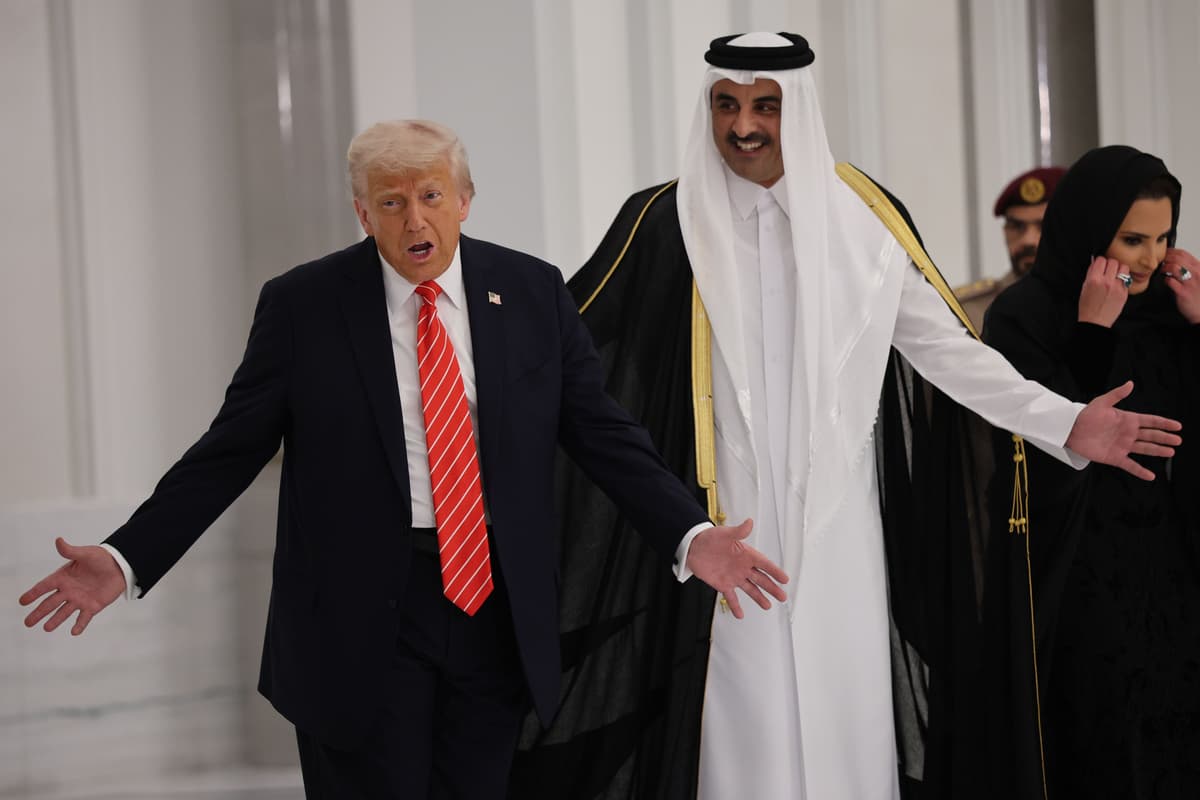

In the high-stakes chess game of Middle East geopolitics, Qatar has pulled off a masterful move: reaping nearly all the rewards of the Abraham Accords — ironclad United States security backing, lucrative economic ties, and newfound regional clout — without putting its name on any dotted lines.
By cultivating deep ties across warring factions, maintaining open channels with every power player from Tehran to Tel Aviv, and staying firmly in Washington’s good graces, Qatar has emerged as the region’s foremost power broker. This enables it to preserve its leverage even as its neighbors feel the pressure from Washington to normalize ties with Israel.
“Qatar is able to have influence and to remain a mediator because it is outside of the Abraham Accords,” an expert on the Arab Middle East, James Bowden, tells The New York Sun. “The lack of attachment allows it to appear neutral and serve as a reliable arbiter.”
“Neutrality is what ostensibly qualifies Qatar to mediate regional conflicts, and joining the Abraham Accords would effectively be ‘picking a side’ — that is, aligning with Israel and the pragmatic Gulf countries,” adds a senior research analyst at the Foundation for Defense of Democracies, Natalie Ecanow.
How Qatar Plays Both Sides of the Fence
Qatar steadfastly refuses to formally normalize relations with Israel — in sharp contrast to the United Arab Emirates and Bahrain, which joined the Abraham Accords in 2020. While the two nations used to maintain low-level ties — with Israel even opening a trade office at Doha in 1996 after the Oslo Accords — that relationship ended in 2009 amid the three-week Gaza war.
Still, Qatar functions as a critical, if controversial, conduit for back-channel messaging among Israel, Hamas, the Palestinian Authority, and regional stakeholders. Since 2012, the emirate has hosted Hamas’s political bureau — a move made at the request of the United States to facilitate communication channels. It also provides hundreds of millions of dollars in humanitarian assistance to Gaza, often in coordination with Israel, the United States, and the United Nations — at least before the 2023 war.
By remaining outside the accords, Qatar can mediate during crises; maintain open lines to all parties, including Iran-backed groups, and position itself as indispensable without risking backlash from pro-Palestinian constituencies at home or abroad.
“Qatar has been involved in peace negotiations and resolving regional and extra-regional disputes since 2000. This has lent their negotiations significant credibility,” says Mr. Bowden.
Qatari officials insist that their engagement with groups like Hamas is purely for mediation and humanitarian coordination, not because of an ideological alignment. They frequently argue that “someone must talk to all sides,” and point to successive United States administrations — Democratic and Republican — that have leaned on Doha to maintain those channels.
Any future normalization with Israel will be contingent on meaningful progress toward a Palestinian state based on the 2002 Arab Peace Initiative, its leaders say, but Qatar’s flexibility has enabled Doha to work directly with Israel on practical matters from hostage negotiations to cease-fire proposals to humanitarian mechanisms — all without entering formal diplomatic relations.
Strategic Alignments and Generational Maneuvers
Several key moves have led to Qatar’s rising regional relevance and diplomatic flex over the past 25 years. Despite being hampered by a Gulf Cooperation Council-imposed blockade between 2017 and 2021 — punishment by its neighbors for Qatar turning a blind eye to Iranian-backed terror in the region — Doha emerged stronger than before thanks to Iran and Turkey’s support.
That relationship is now being tested as Turkey and Iran seek to keep a heel on Qatar in a new regional realignment.
“The greatest limitation on Qatar and its relations with Israel and the U.S. is its relations with Turkey and Iran,” Mr. Bowden says. “Qatar owes its continued economic viability to Turkish and Iranian supplies during the 2017 to 2021 GCC blockade. Iran and Turkey have likely threatened to pull their continued economic and military support if Qatar joins the Abraham Accords. I doubt that they are willing to take that risk.”
This balancing act also applies to Doha’s regional ambitions. With its large natural gas wealth — 10 to 15 percent of global reserves — it can buy and sell influence, both at the nation-state level and with asymmetric players.
Mr. Bowden points out that Qatar also created the Qatar Fund for Development as a long-term counterpart to Kuwait’s historic development fund — part of a broader aspiration to deepen its credibility as a mediator and international donor.
“Qatar has created the Qatar Fund for Development to be a rival to the Kuwaiti Fund for Arab Economic Development,” he said. “It is not there yet, but it is meant to slowly replace and go further than the Kuwaiti fund.”
But more influential than any other agreement may be Qatar’s strategic relationship with the United States. Al-Udaid Air Base, America’s largest military installation in the Middle East and home to U.S. Central Command’s 8,000 American troops, is located in Doha.
The air base has cemented Qatar’s status as a strategically indispensable partner: Washington relies on it for military operations, intelligence collection, and quiet diplomacy while also gaining regional access that would be extremely costly, or politically impossible, to replicate elsewhere in the Gulf.
“What appears to be a heavy driver of security guarantees for Qatar is the presence of Al-Udaid Air Force Base,” Mr. Bowden says. “The tradeoff for such a large and prominent base in the Arab Gulf has been that the U.S. will work to keep Qatar secure from attack.”
In September, President Trump formalized that tradeoff after Israel targeted Hamas leaders at Doha. The military incursion on Qatari territory — Israel’s first — challenged Doha to demonstrate its restraint while continuing its back-channel diplomacy to end the Gaza war. It was rewarded with a formal security guarantee committing the United States to defend the emirate against external attack — using diplomatic, economic, and, if necessary, military means.
The deal effectively grants Doha an unprecedented unilateral United States security guarantee. In exchange, the United States was able to secure a cease-fire in Gaza.
“The executive order that President Trump issued guaranteeing Qatar’s security came on the heels of Israel’s September 9 strike against Hamas operatives in Doha and was part of a broader diplomatic dance that ultimately pushed the Gaza deal across the finish line,” Ms. Ecanow explained.
Spreading ‘Good Will’ Around Congress
Long before September’s security agreement, Doha was already cultivating immense influence in Washington. According to public filings, it has poured more than $243 million into Washington lobbying since 2015. In 2017 alone, as the Gulf blockade was underway, it spent $16.3 million on lobbying and employed some 23 firms, quadrupling its spending from the previous year.
It has expanded lobbying campaigns, hired prominent former officials, and invested heavily in American universities through “Education City,” a research hub established at Al Rayyan that hosts branch campuses of several top American institutions.
Critics argue that this flood of money enables a double-sided game: While Qatar portrays itself as a broker for peace, opponents say it also uses its deep pockets to shape American politics, boost its international image, and whitewash more controversial ties.
As one report puts it, Doha’s influence-peddling “operation draws congressional scrutiny” for mainstreaming narratives that downplay its connections to Hamas and other adversarial actors.
Allegations by watchdogs suggest more opaque influence campaigns from Qatar, which channels money through nonprofits, educational institutions, and media platforms, amplifying its agenda without full public scrutiny. Qatar, however, rejects allegations of covert influence campaigns, saying its lobbying and public diplomacy efforts are disclosed under U.S. law and are comparable to those of other Gulf states, such as the UAE and Saudi Arabia, which also spend heavily in Washington.
Some foreign influence experts note that while Qatar’s spending is substantial, it is not unique in a region where states routinely compete for access.
Regional Relevance and Diplomatic Flexibility
For Washington, Qatar remains a complicated partner. Ms. Ecanow warns that Washington risks overlooking the contradictions embedded in Doha’s foreign policy.
“Washington mustn’t forget that Qatar is a patron of Hamas, the Taliban, and the Muslim Brotherhood, rubs elbows with the Iranians, and does business with the Chinese and the Russians,” she asserted. “Tying the United States tighter to Qatar risks giving Doha cover for pursuing adversarial policies and relationships.”
By branding itself as neutral, wealthy, and flexible enough to avoid rigid alliances, Qatar secures the benefits of a deep Washington partnership and regional influence without paying the full political cost of formal alignment, a strategy that appears durable.
“I think that this is still an ongoing issue,” Mr. Bowden said. “And the longer that they remain outside of the Abraham Accords, the reasons will be clearer.”

