Tens of Thousands of Afghans Face Uncertain Fate in America After Killing of National Guard Member
Many more remain in third countries years after the fall of the Taliban, working through an elaborate application and vetting process.
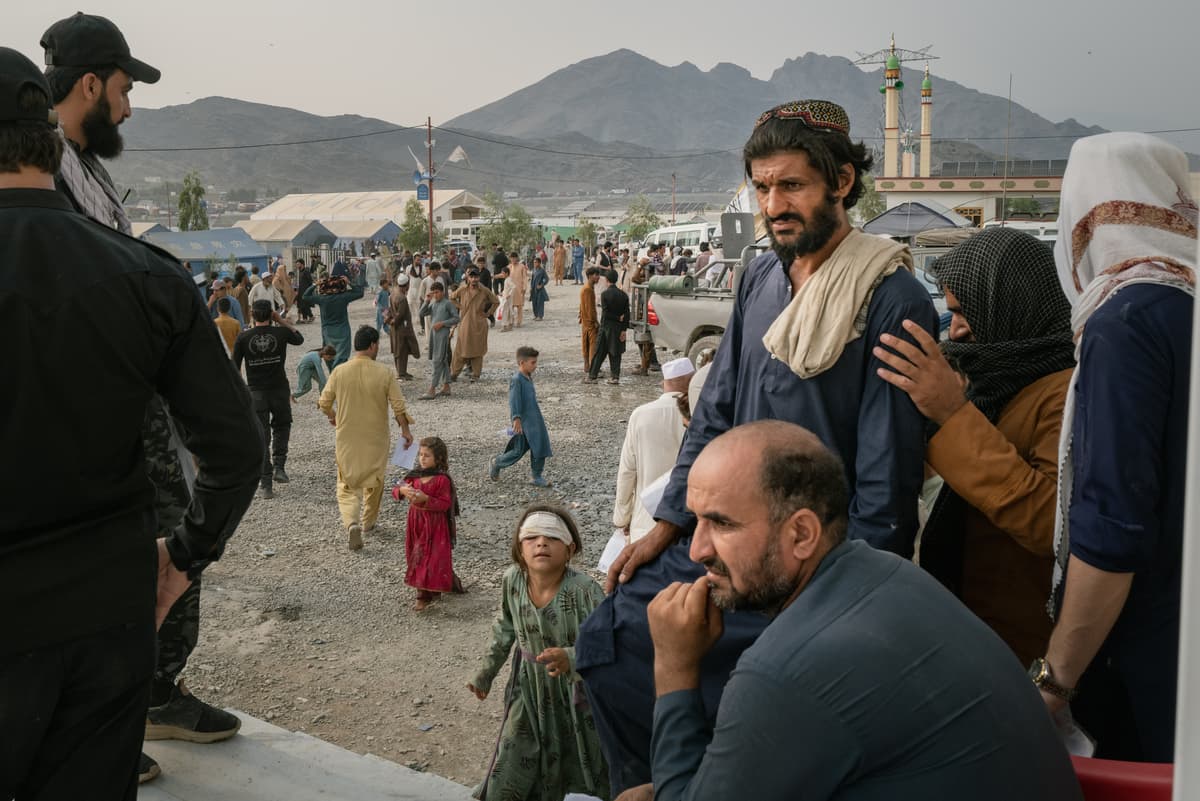

A freeze on processing leaves tens of thousands of Afghan applicants for permanent status in the United States in limbo, many of them in third countries where they fear deportation home to face Taliban retaliation for their support of America in its 20-year war.
Despite concerns about the quality of Biden administration vetting of the former interpreters, military aides, embassy staff and others, many were still working their way through the arduous application process more than four years after the fall of Kabul when President Trump froze the process this week.
“I was deeply distressed when I heard this news. We have completed all the required review procedures,” a former TV presenter and press adviser under the ousted U.S.-backed government, Ahmad Samim Naimi, told Reuters from Pakistan, where he has been awaiting resettlement in America.
“If I go back, one day you will certainly hear news of either my arrest or my death,” he said.
U.S. Citizenship and Immigration Services announced a halt to the processing of immigration applications from Afghanistan on Wednesday, hours after the arrest of an Afghan refugee accused of killing one National Guard member and wounding another in Washington, D.C.
In a speech that same evening, Mr. Trump said, “We must now re-examine every single alien who has entered our country from Afghanistan.”
That will be an enormous – and likely time-consuming – task. The then secretary of state, Antony Blinken, said at the end of last year that 183,000 Afghans had been brought to the United States under a variety of programs since the fall of Kabul. He number is now believed to have topped 200,000.
Only a fraction of those, estimated at 20 percent, were admitted under what is known as Special Immigrant Visas, which allow for permanent residency. To be eligible they must have worked directly for America for at least one year of “faithful and valuable” service during the war.
The remainder include persons such as journalists, women leaders, human rights defenders, and former employees of American contractors who are at high risk of Taliban retaliation. Admitted as refugees or under other programs, their future is uncertain.
“Life was finally getting easier for me,” 22-year-old Nesar, who arrived in America soon after the fall of Kabul, told the Associated Press on condition his last name not be used.
I’ve learned to speak English, I found a better job,” he said. But after this week’s shooting in Washington, “I went to the grocery store this morning, and I was feeling so uncomfortable among all of those people. I was like, maybe they’re now looking at me the same way as the shooter.”
Tens of thousands more Afghans across all categories – people like Mr. Naimi – remain trapped in third countries where they have waited months or years for vetting to be completed and their applications to be processed.
For some of them, time is running out. Pakistan, the first stop for many on their escape route from Afghanistan, has forced more than 1.5 million Afghans to return home since late 2023, including many in the American refugee pipeline.
Among the luckiest were thousands of Afghans flown out of the country by America on secretive chartered flights in the weeks immediately after the Taliban takeover in Kabul.
These individuals, who qualified for permanent American residency under the SIV program, were taken to third countries such as Qatar where they were housed, often on American military bases, while they underwent weeks of vetting.
“All potential travelers to the United States continue to undergo extensive biographic and biometric security vetting conducted by our law enforcement, counterterrorism and intelligence agencies,” a State Department spokesman told Voice of America at the time.
Speaking in August 2022, the spokesman said authorities at Camp As Sayliyah in Qatar had “dramatically” shortened the timeline from arrival to departure so that most successful applicants were processed within 30 to 60 days of arrival.
“While we continue to improve our system for relocating and resettling Afghan allies in the United States, what won’t change is our commitment to keeping Americans safe,” the spokesman said.
Nevertheless, the system wasn’t perfect. Among those in the first wave of Afghans to be admitted to America was Rahmanullah Lakanwal, the man accused in this week’s killing of a National Guard member.

