After Trump’s Breakthrough in Gaza, the Fog of Peace Emerges
We don’t yet have peace, though. We have promises. We’ve had those before.
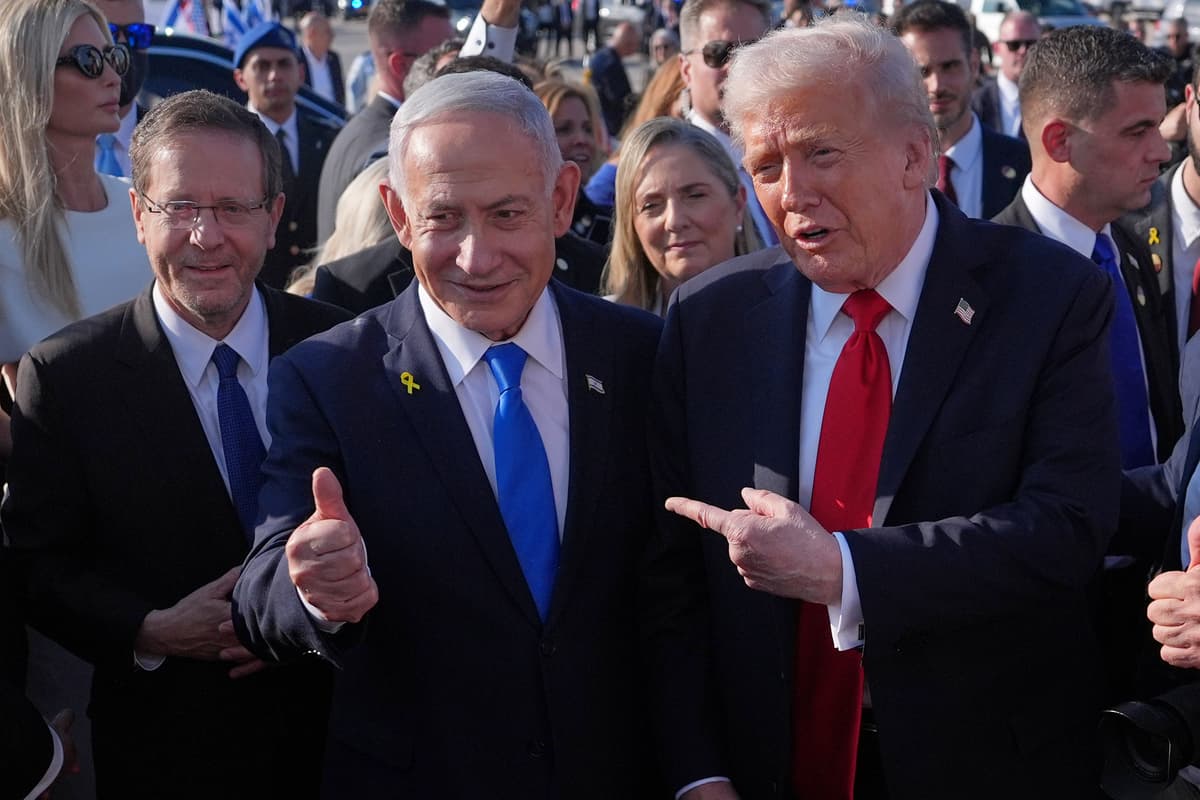

Early Monday morning as the press reported on President Trump’s trip to Israel and videos of freed Israeli hostages reuniting with their families flooded social media, we were told that we were watching peace break out in the Middle East.
Two years — no, decades, or maybe millennia — in the making, they said. Mr. Trump flew to Egypt for a Peace Summit with leaders from around the world and signed a “Peace Plan.”
The sight of 20 young men returning home after two years of torture could make one believe in anything, any miracle — even peace in the Middle East. We don’t yet have peace, though. We have promises. We’ve had those before.
The document that Mr. Trump signed at Sharm el-Sheikh, Egypt, talked about the region becoming “a place where everyone can aspire to peace” and committed signatories to “strive for a comprehensive vision of peace.” Translation: We may have peace someday, but that day hasn’t yet arrived.
It’s hard to believe it will arrive. The three other signatories to the document don’t exactly inspire confidence.
Egypt’s president, Abdel Fattah el-Sisi, the host of the Peace Summit, leads a country that allowed Hamas terrorists to funnel weapons of war into Israel through the same border that it closed to Palestinian aid. Egypt already has a peace deal with Israel. Clearly it contains loopholes that allow for very non-peaceful behavior.
Emir Tamim bin Hamad Al Thani’s country, Qatar, has supported Hamas, funded the Muslim Brotherhood, and invested billions of dollars into American and global institutions to control the narrative about its Islamist activities. Qatar and peace are hardly synonyms.
The president of Turkey, Recep Erdogan, threatened to turn his plane around and return to Ankara rather than participate in the summit if Prime Minister Benjamin Netanyahu, the leader of the country supposedly making peace with the Palestinians, dared to attend. Enough said about Mr. Erdogan.
Even before Mr. Trump flew to Egypt, peace in the halls of Israel’s parliament was disrupted. As Mr. Trump spoke, an Arab member of the Knesset, Ayman Odeh, and a member of the far-left Hadash party, Ofer Cassif, shouted “terrorist” at the American president there to make peace, and “genocide” at their fellow Israeli members of parliament with whom they peacefully serve in government.
Their anger was misdirected. As they raged, Hamas leaders in Gaza (where peace was supposed to be breaking out) were rounding up fellow Palestinians and shooting them in the streets.
Clans who threaten Hamas’s authority are now being not-so-peacefully hunted down by the very terrorists who were supposed to be disarmed according to the 20-point peace plan that precipitated the Summit and has already been violated.
Meanwhile, 50,000 Lebanese youth pledged allegiance to Hezbollah on Sunday. Hezbollah now boasts fewer leaders and weapons caches with which to threaten the “peace” thanks to Israel’s successful elimination of both threats just months ago, but there seems to be no shortage of young people willing to keep the jihad going.
Last week Israeli intelligence intercepted a large shipment of weapons being smuggled into the West Bank where the Palestinian Authority is currently undertaking “reforms” to comply with peace plan conditions so it can govern Gaza — peacefully of course.
At Khan Yunis a new café opened this week named “Nova Cafe” so patrons can recall a day of war, not peace, as they sip their coffee. No word yet if the United Nations has ordered its Palestinian textbooks reprinted, absent math lessons that teach kids to accurately calculate the angle of a stone launched at an Israeli soldier’s head.
Israelis haven’t even been able to make peace amongst themselves. Mr. Netanyahu continues to face corruption charges by his political opponents and is accused by detractors of prolonging the battle in Gaza to avoid new elections and legal accountability.
A more peaceful opposition in Israel might drop these charges now. Mr. Trump, in his remarks in the Knesset, invited Israel’s president, Isaac Herzog, to pardon Mr. Netanyahu should the left pursue a less peaceful path.
This could be the fog of peace — the confusing, emotionally overwhelming period when we are so grateful and relieved to see the hostages freed that we are willing to believe anything: even that peace is possible.
This may be the moment in history when the Abraham Accords, a weakened Iran, potential offshore natural gas exploration, and renderings of Gaza-a-Lago incentivize a new generation of practical actors to deliver something that has evaded generations of their predecessors.
Or, it may be another performance of “Peace in the Middle East” hosted on an international stage, where politicians and profiteers ready themselves for the next generation of the “Peace Industrial Complex.” We can’t yet know — but we can venture a good guess.
Correction: The far-left Hadash party is represented by Ofer Cassif in the Knesset. An earlier version misstated Mr. Cassif’s affiliation.

